Shelf Aware — Norman Jorgensen

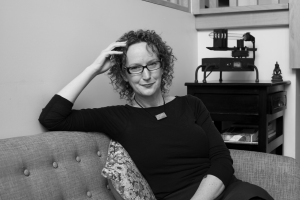
Norman IMG_1164Children’s author Norman Jorgensen has been writing stories since he was in primary school, and his latest story, The Smuggler’s Curse (Fremantle Press), details the rollicking adventures of young Red Read, whose mother “sells him to an infamous smuggler, plying his trade off the north-west coast of Australia in the closing days of the 19th century”.

Norman’s first picture book, In Flanders Fields (with illustrations by Brian Harrison-Lever), set in World War One, tells of a homesick young soldier who risks his life to rescue a robin caught in the barbed wire of no man’s land. In Flanders Fields won the Children’s Book Council of Australia (CBCA) Picture Book of the Year Award in 2003 — the first of many awards for Norman. He has since written a dozen books for children and young people.

Born in Broome, in Western Australia’s tropical north, he now lives in a 100-year-old house near Perth with his wife, and his collection of books and old movies. He loves to read, travel and take photographs, especially of castles, cathedrals, villages, battlefields, sailing ships and all the things that make history exciting.

Norman Jorgensen will be the guest author at Koorliny Arts Centre’s Stories on Stage on Wednesday, March 29, from 7pm. If his responses to my questions are any indication, it will be a lively and highly entertaining event.

Q. How would you describe the work that you do and how you do it?

A. Chaos is probably the best description. My mind flits from one shiny thing to the next, looking for a distraction, and then, somehow, among all the mental noise and confusion, the faint ideas for stories appear. After the really enjoyable time writing the first draft and creating the characters, the plot and locations, the hard slog of reshaping and polishing the sentences into something hopefully readable takes over.

Q. What is your latest project, and/or what do you have in the pipeline?

Norman The-Smugglers-Curse-1-780x1100.jpgA. The Smuggler’s Curse was published in October, and is the story of young Red Read from Broome, who is sold by his mother to a sea captain in the dying days of the 19th century. Black Bowen, the captain, turns out to be an infamous smuggler plying his trade off the north-west coast of Australia and up to Singapore. From terrifying encounters with cut-throat pirates to battling the forces of nature in a tropical typhoon, to encounters with head-hunting guerrillas, and even being nearly hanged by colonial troops, Red is in for the adventure of a lifetime. As the newest member of the crew of The Black Dragon, a sleek, fully-armed clipper, he is forced to quickly grow just to even survive. 

I have started the sequel to The Smuggler’s Curse. I had left the ending open for the next adventure, and my editor suggested I get on with it reasonably quickly so that any young fans of it will not grow too old before it comes out.

I am also working on a non-fiction book called In Search of Constable Jack Kelly. Constable Jack was the half-brother of Ned Kelly, the infamous bushranger. Unlike Ned, Jack had a glittering career as a world-famous circus performer who travelled the world and became rich and successful. For a couple of years, though, from 1906, he was based in Perth and had a job as a mounted policeman with the WA Police Force, before joining Buffalo Bill’s Wild West Show and travelling throughout the USA.

Q. Where are the main bookcases in your home or office? Do you also keep books in other places at home (or elsewhere)?

Norman IMG_1149

A. Jan and I have a dining room lined with floor to ceiling bookcases, a spare room with more shelves and my writing studio has three walls lined with shelves as well. We both have been collecting books all our lives, cannot bear to throw books away, and even get upset seeing them mishandled or damaged in any way. I am in favour of capital punishment for people who mistreat books — or at least, public flogging, stocks, branding and medieval pillories for public abuse, attack and ridicule.

Norman IMG_1174

Q. How are your books organised/arranged?

A. The non-fiction books are in very rough order of subject, and the fiction is everywhere – anywhere I could find a space to squash them in. Even though Jan was a librarian most of her working life, she has resisted Dewey-ing them. I have a large collection of film history books that take up several metres of shelving. Other than that, I can never find the book I am looking for.

Q. What sorts of books predominate? (ie general fiction; specific genres such as romance, science fiction or historical fiction; non-fiction; reference books; short stories; novels; poetry; drama; children’s or young adult fiction; picture books, etc.)

A. All of the above. We have a great collection of kids’ books signed by the authors, having met loads of them at festivals and on book tours over the years. I also love historical fiction, especially 18th-century sea stories like those of CS Forester and his Hornblower series, Julian Stockwin’s Kydd series, Alexander Kent’s books featuring British naval hero, Captain Bolitho, and Patrick O’Brian’s Master and Commander books. I like too the historical novels of CJ Sansom, like Dissolution and Lamentation, set in the times of King Henry VIII. They are so descriptive of Henry’s London that you feel grubby just reading them, and nervous that the king will come after you next — after he has finished chopping off the heads of those close to him. He was certainly keen on that.

Q. Describe your favourite reading place.

A. My favourite place of all is soaking in a hot bubble bath with water up to my eyes, soft music playing, and me lost in the story in some exotic location. The only downside of this is dosing off, dropping the book in the water and nearly drowning. And if you do that you deserve to drown. Having said that, I cannot sit anywhere alone without reading something, even if it is a newspaper, a 10-year-old magazine, a menu, street signs or even a Vegemite label.

Q. What book/s are you reading right now? Why did you choose that book/those books and what do you think of it/them so far?

A. I am reading ABC broadcaster Richard Fidler’s Ghost Empire about him and his son visiting Istanbul, describing it now and writing about what the same place was like during its years when it was named Constantinople. Even being addicted to history as I am, I had little knowledge of the Byzantium Empire of Constantinople, so was surprised to find out about the huge numbers of mad emperors, unhinged queens and countless other crazies who lusted for power over the 2000 years of its turbulent history. I’ve almost finished it, and have been fascinated by every page.

Why did I choose it? It was new, historical and I enjoy Richard’s interviews every day on ABC Radio. He is a clever, interesting bloke who shows plenty of care and kindness with his guests.

I’m also re-reading an old 1980s adventure called High Citadel by Desmond Bagley, about a group of plane crash survivors sheltering in a mine in the Andes Mountains and under attack by Communist forces. I picked it up in a second-hand bookstore just for nostalgia’s sake as I remember enjoying it when it was first published during the Jurassic period.

Q. What are your favourite books and/or who are your favourite authors?

A. My favourite authors are Leslie Thomas and Tom Sharpe, both British  writers who generally wrote satirical comedy novels about ordinary people living suburban lives while mayhem surrounds them. When Leslie died in 2014 and Tom in 2013 I was shocked at how saddened I was each time, as if I had suddenly lost a part of me and a whole chunk of my early reading years. I didn’t know either of them, though I met Leslie Thomas briefly at a book signing after a talk he gave here in Perth. He answered ALL my questions then afterwards signed my book, “To my greatest fan, Norman”, and he wasn’t the least bit wrong.

I love the work of Bill Bryson and have read every word of his. We are much the same age, and his gentle sense of humour matches mine exactly. The Lost Continent: Travels in Small Town America, about him looking for the small town America of the old movies, is funny but also so sad as he slowly comes to realise that it has been lost and the towns have been devastated by enormous Walmarts, huge car parks, endless fast-food joints, closed factories, empty shops and despair.

His most successful book, Notes From a Small Island, about him revisiting the places he went when backpacking around Britain in the 1970s, is a joy to read. He gave his humour free rein, and I loved it, as I did with all his other books. He has since written 20 more.

The first writer to keep me awake all night was John Steinbeck and his book The Pastures of Heaven. In his interwoven stories in this one, nothing much happens, but you become trapped in the lives of his characters and can’t stop reading until you find out what happens to their dreams and plans. After that, I read The Grapes of Wrath, and then all his others. I greatly admire his spare style. Most of all, though, I love how he treats ordinary people, giving them a voice and highlighting their suffering and the widespread unfairness of their situations, caused, usually not by their own fault, but by uncaring banks, greedy landlords, exploitative employers and even just sandstorms, bad weather and bad luck.

Q. In the event of an emergency, if you could save just three books from your collection, which books would they be – and why would you choose them

A. I’d save my signed Leslie Thomas book, The Dearest and the BestAfter that, The Million Pound Bank Note, by Mark Twain, that my great grandfather, John Hansen Jorgensen, was reading when he was killed in a mining accident in Coolgardie in 1906. He signed his name in the front of it and, other than his wedding photo, it is the only keepsake I have of him. Finally, I’d save Treasure Island, by Robert Louis Stevenson. That, along with RSL’s other pirate book, Kidnapped, was the inspiration for The Smugglers’ Curse. If I could have a fourth, it had better be The Coral Island, by RM Ballantyne, as I suspect that may be a major influence on the upcoming Smugglers’ sequel.

Q. If you could sit down for afternoon tea with your three favourite characters or authors, who would they be, what would you serve them, and what would like to talk to them about?

A. Winston Churchill, war correspondent, England’s First Sea Lord, wartime prime minister, Nobel Prize-winning author of more than 30 books, including The History of the English-Speaking Peoples, and deeply flawed genius. I wouldn’t talk to Winston very much at all. I’d just sit and listen. Can you imagine what it would be like? The huge intellect, the voice, the history, and people he must have known over his long career. What would I serve him? Pol Roger, his favourite champagne, then his usual whisky, Johnny Walker Red Label, then, finally, Hine Brandy and a big fat cigar. I don’t imagine he’d be bothered with tea or sandwiches too much.

A fictional character I’d like to meet would be Captain Blood, the original swashbuckling pirate who was created by Rafael Sabatini in 1922. Actor Errol Flynn played him perfectly in the movie made in 1935 by Michael Curtiz and co-starring Olivia de Havilland. In fact, sharing afternoon tea with the three of them at the Admiral Benbow Inne, at Port Royal, Jamaica, would be so much fun. We’d have to be served up pewter goblets overflowing with Captain Morgan Rum, of course – arrr! And what would we talk about? In a pirate bar? In Jamaica? You wouldn’t be able to shut me up.

Then, like most people, I think I’d like to have afternoon tea with Atticus Finch, the hero of To Kill a Mockingbird. We’d discuss dignity, bravery, compassion and empathy, and all the other decent attributes that Harper Lee gave him in spades. We would discuss the Great Depression and Prohibition, which I find fascinating, and am intrigued at how those two elements led to an upsurge in socialism in America in the 1930s, as well as the appearance of the gangsters. And we could talk about Deep South racism, white poverty and the intolerance of the time. I think it would be a pleasant, warm afternoon chat on his verandah with Scout sitting and listening nearby. Oh, and I’m sure he would serve up Jambalaya, Crawfish Pie and Filé Gumbo, all washed down with Mint Juleps or Moonshine. Perhaps we’d even drink some Tequila Mockingbird…

For more from Norman, visit his website.

#normanjorgensen #childrenswriter #booksforkids #fremantlepress #thesmugglerscurse #koorlinyartscentre #storiesonstage #pirates #adventures #historicalfiction

Shelf Aware — Jane Rawson

Jane Rawson headshot

Author Jane Rawson.

Melbourne-based Jane Rawson’s new novel, From the Wreck, is both historical and speculative fiction, and unlike anything I’ve ever read before. Its unique premise combines a fictionalised account of the life story of her ancestor George Hills – who survived a shipwreck off the South Australian coast in 1859 – with that of an ethereal alien being, seeking refuge on Earth from another dimension.

The prose is, quite simply, breathtaking, with language used in innovative, sometimes startling and often visceral ways. It’s so good, in fact, that I ACTUALLY FOLDED OVER SEVERAL PAGES to mark significant or particularly beautiful passages.

From-the-Wreck_cover-600x913

Jane’s day job is in a communications role for the Victorian government. She’s a former travel writer, with her work appearing in Lonely Planet guides and other publications, and the co-author (with James Whitmore) of The Handbook: surviving and living with climate change.  Jane describes her previously published novella, Formaldehyde, as “an adorable little book about arm transplants and bureaucracy”, and fellow Melbourne author Steven Amsterdam describes her first novel, A Wrong Turn at the Office of Unmade Lists, as a “free-range and funny apocalyptic time-space road trip”.

I was incredibly fortunate to interview Jane for Good Reading magazine, ahead of the release this month of From the Wreck, and I was captivated for every minute of our hour-long conversation.

 Jane has the sort of dry, self-deprecating humour that I particularly enjoy. She is smart as a whip, widely read, and modestly brushed aside my compliments about her writing. She graciously agreed to answer my ten questions for a guest post in the Shelf Aware series. I’m confident you’ll find her responses as entertaining as I did.

Q. How would you describe what you do and how you do it?

A. I’m a reader and a thinker and sometimes I get obsessed enough with an idea that I’m also a writer. Those ideas get written (sometimes multiple times) into short stories, novels and non-fiction, depending on how I feel.

Q. What projects are you currently working on or do you have in the pipeline?

A. The ideas that I’m fixated on at the moment are about extinction and about wild animals and how few of them are left – some of this is a continuation of ideas I was fixated on while writing From the Wreck. I’m collecting piles of information and thoughts that might turn into a novel or might turn into a long essay. They might also turn into nothing.

Meanwhile, I’m working on a project with my sister-in-law, who has made a series of beautiful and disturbing prints of alternative gods: I’m trying to write stories to accompany them.

Q. Where are the main bookcases in your home or office? Do you also keep books in other places at home (or elsewhere)?

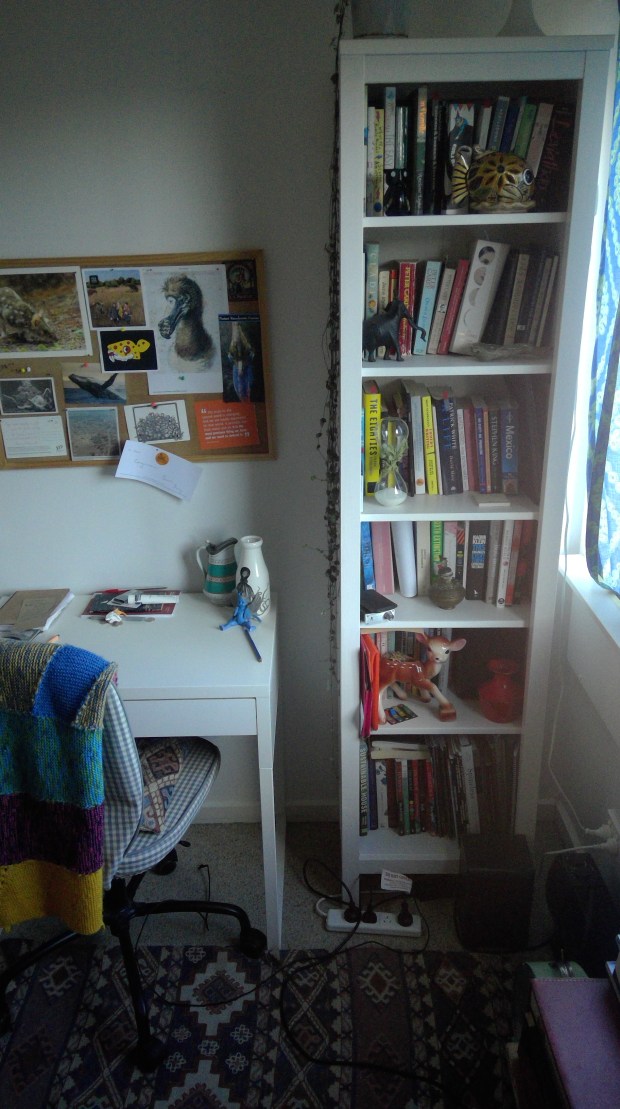
A. I have three bookcases at home – one in the bedroom, one in the spare bedroom (which is also my writing room) and one in the lounge room. There are books on the floor next to my bed, on the night stand, on the kitchen table and in all my various handbags and backpacks.

Jane Rawson 1There’s no more space for books on my bookcases or bookcases in my house so I try to mostly borrow library books and stick to a ‘one-in-one-out’ policy – I can only buy a new book if I give an old one away. I fail nearly every day.

Q.How are your books organised/arranged?

A. I did once file my books by colour but I couldn’t find anything anymore so I went back to the much more conventional alphabetical order by author. Fiction and non-fiction are separated and non-fiction is clumped into a few not-very-specific groups.

Q. What sorts of books predominate?

A. Most of my books are fiction, and most of those are ‘literary fiction’ novels. But I also read stories, experimental fiction, speculative fiction and a little bit of crime, or anything else that takes my fancy. I have a poetry shelf and it’s almost entirely for show – beautiful volumes, entirely unread. I like books about science and the environment; I like books about Australian history; I like graphic novels and books about or full of photography.

Q. Describe your favourite reading place.

A. In bed at 6am, drinking a cup of tea and procrastinating from getting up and going to work. At a bar with a dirty martini, particularly when no one knows where I am. On the couch when I should be grocery shopping. On the train to work, when I forget I’m on the train to work.

Q. What book/s are you reading right now? Why did you choose that book/those books and what do you think of it/them so far?

A. I’ve just been in Mexico for a month and my reading habit is much disturbed. I started The Revolutionaries Try Again, by Mauro Javier Cardenas, and I started A Zero-Sum Game by Eduardo Rabasa, and I started Sidewalks by Valeria Luiselli – all Latin American books I thought it would be good to read while I was away – and I stopped all of them.

GR55_front.FINAL_.small_-227x346

Theoretically I am reading them right now. Really I am reading Griffith Review’s new State of Hope edition about South Australia, because I have a story in it and they sent me a free copy. I’m loving it! The essays and stories are extremely well chosen, and I’ve fallen a bit in love with South Australia. I almost want to move to Adelaide.

Q. What are your favourite books and/or who are your favourite authors?

A. The book I have read the most times is Alive: The Story of the Andes survivors, by Piers Paul Read – it’s not a great book but I was obsessed by the tragic story of doomed young Latin American rugby players when I was 13 and I read it over and over and over. I think it kicked off my general fascination with Latin America, which I later claimed was based on a deep affinity with revolutionary politics. What a liar.

But that’s probably not what you mean. Books I have loved most recently are Ali Smith’s How to Be Both, Kevin Barry’s Beatlebone, The Solar Bones, by Mike McCormack, and Their Brilliant Careers, by Ryan O’Neill.

Q. In the event of an emergency, if you could save just three books from your collection, which books would they be – and why would you choose them?

A. Honestly, I don’t think I would save any. I’m not that into books as objects or talismans, and in some ways it would be a huge weight removed if all my books disappeared. My to-read pile is stupidly big and a little anxiety-inducing. As long as the library always existed I think I’d be OK not to own books anymore. Remind me of this if you find me weeping in the street after a catastrophic fire.

Q. If you could sit down for afternoon tea with your three favourite characters or authors, who would they be, what would you serve them, and what would like to talk to them about?

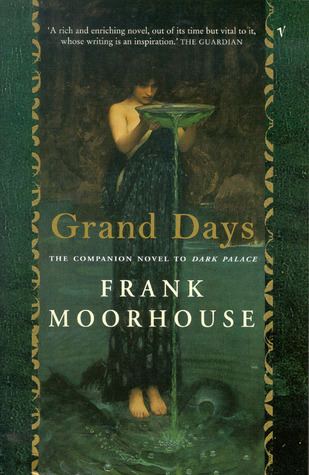
A. I would invite Edith Campbell Berry, of Frank Moorhouse’s Grand Days trilogy, and no one else. I prefer talking one-on-one and anyway, I don’t want to share her. I’d serve her manchego cheese, roasted almonds, honey and slices of green apple, as well as some small slices of halva and nougat. She could choose from a very good dry sherry, sparkling wine or a martini (or all three: whatever she wants). We would talk about the public service, and also frocks, and maintaining decorum under the influence of alcohol.Grand Days

From the Wreck, by Jane Rawson, is published by Transit Lounge. RRP $29.95.

Find out more about Jane:

Website 

Twitter

#janerawson #fromthewreck #transitelounge #speculativefiction #historicalfiction #australianauthor #formaldehyde #australianwomenauthors #awrongturnattheofficeofunmadelists #climatechange #thehandbook

Shelf Aware — Jennifer Ryan

_mg_3718

Jennifer Ryan — author.

Let me introduce you to the delightful Jennifer Ryan, whose new novel, The Chilbury Ladies’ Choir, is in book stores now. It’s a wickedly witty, heart-warming and thoroughly entertaining glimpse at life in an English village in the early part of World War II. When the men from the village choir leave for the war front, the women who are left behind decide the show must go on — but not everybody in the village is keen on the idea of an all-female choir. Inspired by some of the reminiscences of her “Party Granny”, Mrs Eileen Beckley, who “loved nothing more than a pink gin and a jolly good knees-up”, the novel perfectly captures the voices of the women and men who inhabit its pages. Not surprisingly, it has been optioned for a TV show by the makers of Downton Abbey.

Jennifer grew up in Kent, but is now based in the Washington DC area. I had the great pleasure of interviewing Jennifer for the cover story for this month’s Good Reading, and found myself wishing I could fly across to DC, to sit down and share a nice hot cuppa (or perhaps a pink gin) and a good, long chat with her. She is as warm and witty as the nicest of the characters in her novel, and I’m sure you’ll enjoy her responses to my Shelf Aware questions.

Q. Jennifer, how would you describe yourself, as a writer?

chilbury-ladies-choir

The Chilbury Ladies’ Choir is out now.

A. I think I’m a number of different writers. I’m the writer who gets inside people’s brains and pretends to be them, writing down their thoughts and dreams. I’m also the writer who loves those moments when the pen runs away with you, and you’re writing beautiful, descriptive literary prose; sometimes you might even feel like Virginia Woolf during these moments! Then there are those times when I’m cleverly taking something I learnt in college and using it in my work, seeing an allusion fit perfectly, or a mesmerizing twist at the last minute.

And then I’m the writer who’s an editor. I used to be a nonfiction book editor, so I regularly can’t wait for the whole thing to be written so that I can get on with editing it. The transformation of something good into something wonderful happens most often for me at this stage. It’s like a puzzle that needs unravelling.

Q. What projects are you currently working on or do you have in the pipeline?

A. I have started a new book, which is also set in the Second World War but isn’t all that similar to The Chilbury Ladies’ Choir. It is, however, about women again, as I love to see how much they evolved through the war, being given new freedoms and interesting jobs, having more control over their lives, and of course facing the horrific realities of war. They have such spirit and energy, not to mention their wonderful voices.

Many people want to know if there’ll be a sequel to The Chilbury Ladies’ Choir, and I would love to write one, so maybe in the future.

Q. Where are the main bookcases in your home or office? Do you also keep books in other places at home (or elsewhere)?

A. We moved recently, so my books are scattered throughout the house, and are rather higgledy-piggledy, with work books mixed with novels and travel books and even some of my kids’ books intermingled. Some of the Second World War books that I’m currently using a lot for research are sitting in a shelf unit behind me here at my desk (which is the end of the dining room table). There are also some in the kitchen as there’s a built-in book shelf there and we don’t have many cookery books. The sitting room has shelf units that house most of my oldies, such as the Dostoyevskys and EM Fosters, and then there’s the inevitable pile next to the bed, which has grown to the extent that there’s a spare pile on the floor.

jennifer-ryan-shelves

My book storage is all rather chaotic, and I’d like to say that I know where everything is but, well, that’s probably not the case. In fact, I have a suspicion that some of my books went astray during our move, or that we have a guest who steals books on a regular basis. My husband suggests that I might find the missing books if I simply reorganised them.

Q. How are your books organised/arranged?

A. No filing system, no colour coding, nothing. They’re a mish mash of everything, and although I keep thinking I’ll sort them out when I get the time, I’m not sure if I ever will.

Q. What sorts of books predominate?

A. It’s mostly fifty-fifty novels and nonfiction research books, with a few plays and short story volumes and the occasional travel guide. Of the novels, there are the classics and then a lot that are funny, from PG Wodehouse and EF Benson to Nick Hornby. There are many historical novels too, as I love that genre, especially Second World War books, such as Chris Cleave’s Everyone Brave is Forgiven and Marcus Zusak’s The Book Thief. There are a lot of collections of plays, and I still draw on them now for inspiration, such as Noel Coward, Oscar Wilde, and George Bernard Shaw. The nonfiction are largely Second World War memoirs and reference books. I have my favourites, such as Don’t Forget to Write: The True Story of an Evacuee and her Family, by Pam Hobbs.

Q. Describe your favourite reading place.

A. I read in bed every night before going to sleep, and look forward to it with a passion, sometimes going to bed early if I’m reading an especially good book. It could be a novel or nonfiction research material, where I usually take notes on a folded-up sheet of A4 tucked in and serving as a bookmark.

Trains, planes and waiting rooms are other favourite places. When you’re sitting in a train, you don’t need to be doing something else; it’s a time to indulge in the things we love doing the most.

Q. What book/s are you reading right now? Why did you choose that book/those books and what do you think of it/them so far?

A. I’m reading The Trouble with Goats and Sheep, by Joanna Cannon. I’ve only just started and I’m already hooked. It is, unquestionably, the kind of book I enjoy: rich with humour, a great plot and fascinating characters. I can’t wait to get back to it!

Q. What are your favourite books and/or who are your favourite authors?

A. Jane Austen’s Pride and Prejudice has to be the best book ever written, and I don’t care that it’s everybody’s favourite too. Every time I read it, I get more from it, and I must have read it at least thirty times. It has a prime position beside my bed, as one never knows when one might be in need of a little Sir William Lucas or, my current favourite character, Caroline Bingley.

My second would be Mrs. Dalloway, by Virginia Woolf. I love the way the lyrical sentences carry me into a different world, almost to a higher spiritual plane.

Another favourite is Brideshead Revisited by Evelyn Waugh. I just love that compounded passion, the subtlety of the events, and, mostly, the powerful language. Sebastian has to be one of the best characters ever drawn.

It’s frivolous, I know, but another book I go back to time and time again is Nick Hornby’s High Fidelity. It’s set in north London, where I used to live, and inhabits a world that I miss; the chaos and the creativity blended with the comedic coming-of-age story. I love his use of lists, and have to say that everything I’ve ever written has to contain at least one, good list.

As for authors, Kate Atkinson has to be up there. Her Life After Life is a particularly excellent work. I love the way she plays with concept and form, and takes us into a double-meaning of everything we’re reading.

Q. In the event of an emergency, if you could save just three books from your collection, which books would they be – and why would you choose them?

A. I’m thinking that the emergency is a nuclear explosion, and I’m trapped in a metal bunker for 15 years with only three books to help me through, so they’d have to be long and/or with potential for re-reading. The first would be Austen’s Pride and Prejudice, then Dostoyevsky’s Crime and Punishment, and finally Charles Dickens’ Bleak House. The last one has been sitting in my book shelf these past ten years, and I really need an excuse to get reading.

Q. If you could sit down for afternoon tea with your three favourite characters or authors, who would they be, what would you serve them, and what would like to talk to them about?

A. The first would have to be Virginia Woolf. I’d just like to get inside her head, work out who she really is, how she sees the world. I think I have an idea of her and I’d like to see if she fits with that. I’d also like to talk to her about sentence construction and the poetry of her work. I don’t think it would matter what we ate and drank. Tea perhaps?

The second would be Dorothy Parker. I think I’d just let her lead the conversation, perhaps prompting her with questions like: What is your favourite memory? Who in history would you have liked to marry? How would you like to be remembered? I’d serve fancy hors d’oeuvres with cocktails, of course!

My third would be Kate Atkinson. I adore her books, and have a thousand questions about them and how she created them, especially her lateral thinking through the concept and plotlines. She always brings so much to the table with every novel, and I’d love some insight into how she does that. My guess is that she’d be a tea and scones kind of woman.

The Childbury Ladies’ Choir, by Jennifer Ryan, is published in Australia by HarperCollins, rrp $29.99. http://www.harpercollins.com.au/9780008163716/the-chilbury-ladies-choir/#sm.0001e97mifb7kdyuzec2292j7ca4v

Find out more about Jennifer here:

http://jenniferryanbooks.com/

https://www.facebook.com/JenniferRyanBooks/

https://twitter.com/JenniferiRyan

#jenniferryan #thechilburyladieschoir #harpercollins #worldwartwo #singing #choirs #choir #englishvillage #downtonabbey #amreading #books #fiction #shelfawareness #dorothyparker #kateatkinson #virginiawoolf #nickhornby #joannacannon

Shelf Aware — Natasha Lester

natashalester-010a

Natasha Lester — Author.

I’m thrilled and delighted to reveal that my first guest blogger in the Shelf Aware series is Natasha Lester. I met Natasha when I signed up for one of her creative writing courses at UWA Extension, and in the ensuing years I’ve come to respect and admire her for her professionalism and writing talent, and adore her for her warmth, generosity and kindness.

She is an extremely talented writer, but she’s also someone who gives so much back to the writing community, through workshops, courses and a brilliant blog, with lots of tips, advice and interesting insights into a writer’s life — allowing us to learn from her experience. If you were at the Perth Writers Festival on the weekend, you may have been among the lucky people to attend one or more of her sessions — and you probably saw the banners bearing her smiling face at strategic points around the grounds of UWA.

A new edition of Natasha’s third novel, A Kiss from Mr Fitzgerald, has just been released, and her next novel, Her Mother’s Secret, is due for release on March 28 (I’ve reviewed it here).

I know you’ll enjoy reading her responses to my Shelf Aware questions, and I hope you’ll visit her website and social media sites to learn a little more about her, and her work (I’ve included the links at the bottom).

Q. Natasha, how would you describe yourself, as a writer?

A. I’m a writer of historical fiction. I love writing stories about women fighting against society to do or to become something that wasn’t deemed suitable for women at the time. I want to, in my fiction, celebrate those women who were brave enough to change the world, the women who’ve allowed me to enjoy the many opportunities that I have today. A strong sense of place and time is really important to me in my fiction; I want my readers to feel as if they are transported back to the era and location of the story, whether it be a speakeasy in Greenwich Village or a chemist’s shop in a small English village. And I love writing about love; having a strong love story is a key part of my books.

I’m a very chaotic writer; I never have any real idea of what my stories are about, other than the central idea of the women and their particular fight. So I find writing first drafts to be very hard work as I’m discovering the story page by page. After that, the process is much more relaxed; I know what the story is and I rewrite it as many times as I need to in order to make it the best story I possibly can. My writing chaos is completely at odds with the rest of my life where I’m a very organised person!

Q. What projects are you currently working on or do you have in the pipeline?

A. I’m usually juggling three books, and this year is no exception. The new format and gorgeous new cover of A Kiss from Mr Fitzgerald came out on 14 Feb, and my new book, Her Mother’s Secret, is out on 28 March so I have publicity work to do for both books. This involves author talks, which I love doing, interviews, book signings, and lots more.

I’m also writing a new book, tentatively called The French Photographer, which I hope will be my 2019 book. Plus, I’ve recently submitted a manuscript with the working title of The Seamstress from Paris to my agent. From there, she will send it to my publisher, I will pray that I get a contract, and then, with any luck, I’ll have the editing of that book to do this year, ready for publication in March 2018.

Q. Where are the main bookcases in your home or office? Do you also keep books in other places at home (or elsewhere)?

A. I have a whole wall of bookshelves in my office. When we designed our house, I was VERY particular about asking the builders to make sure that one entire wall was devoted to books. They thought I was crazy, but I wasn’t – it’s already starting to fill up much too fast!

My 3 kids also have a massive bookshelf in their playroom for all their books. 2 of them are avid readers so they need lots of space too!

natasha-lester-shelf-2

A whole wall of Natasha’s home office features customised book shelves.

Q. How are your books organised/arranged?

A. I used to just put the books on the shelves wherever they seemed to best fit as I didn’t want the books to feel like they had to be forced into alphabetical order (yes, perhaps I am a little crazy!) But then I could never find anything! So I’ve resorted to alphabetical order and now I can locate any book I need quickly.

natasha-lester-shelf-1

Current research books have a separate shelf.

I have separate shelves for the research books for each novel I’m working on; that’s always a shelf right by my desk as I often need to reach out for those books while I’m writing. Books about writing also get their own shelf, just because!

Q. What sorts of books predominate?

A. It’s probably not a surprise to know that I have a lot of historical fiction on the shelves; it’s what I write so it’s a genre I love. I also have a couple of shelves of classics, which I can read at any time and know I’ll be reading a book that I adore. And now there’s quite a bit of non-fiction on the shelves, with all the research books I need to write my own historical novels.

natasha-lester-shelf-3

Historical fiction, classics and contemporary novels, plus non-fiction for research.

Q. Describe your favourite reading place.

A. I usually read in bed for half an hour before I go to sleep. I rarely read fiction during the day as I’m working, but I will read my research books. I do that in a very comfy chair that I bought especially for that purpose; it lives in my office, has a beautiful outlook over the garden and sits next to a coffee table so I can drink lots of tea while I read, which is very important!

Q. What book/s are you reading right now? Why did you choose that book/those books and what do you think of it/them so far?

commonwealthA. Right now I’m reading Ann Patchett’s Commonwealth. It was on so many “Best Books” lists last year that I was worried I was missing out by not having read it! The only other Ann Patchett I’ve read is Bel Canto, which I really liked, but didn’t love in the evangelical way that many people do. So far, I’m enjoying Commonwealth; I’m only about a third of the way in and unless it has a big surprise in the remainder of the book, it probably won’t make my best books list.

Q. What are your favourite books and/or who are your favourite authors?

A. I’m more of a favourite books person than a favourite authors person. I rarely find an author whose every book I love in the same way. So my favourite books are Jane Eyre by Charlotte Bronte, Persuasion by Jane Austen, The Blind Assassin by Margaret Atwood, Atonement by Ian McEwan, Possession by AS Byatt, A God in Ruins by Kate Atkinson, Slouching Towards Bethlehem by Joan Didion, Wolf Hall by Hilary Mantel, Little Women by Louisa May Alcott and A Little Life by Hanya Yanagihara.

Q. In the event of an emergency, if you could save just three books from your collection, which books would they be – and why would you choose them?

A. Oh my God, that question is like torture—only three! Definitely my Complete Novels of Jane Austen, which is cheating a bit because it’s several books in one! This was the only book I took with me when I moved to London for a couple of years and I took it because I knew that no matter what happened, I could always sit down with Jane Austen and feel better. I still have my childhood copy of Little Women and I would save that because it’s sentimentally very special to me. Probably also Jane Eyre as this is one of my most favourite books.

Q. If you could sit down for afternoon tea with your three favourite characters or authors, who would they be, what would you serve them, and what would like to talk to them about?

A. I would choose Jude from A Little Life and I would serve him kindness in a tea cup. I probably wouldn’t talk to him unless he wanted to talk because he’s been forced to do too many things in his life already. I’d also choose Philippa Somerville from Dorothy Dunnett’s Lymond series because she’s my favourite heroine ever. I’d serve her Turkish Delight—anyone who’s read the series will know why—and I’d talk to her about all her adventures in sixteenth century Europe, adventures which stretch from the Scottish court, to the English and French courts and all the way across to the Ottoman Empire. Lastly, I’d choose Amy March from Little Women because she was the first heroine I adored as a child. I’d serve her afternoon tea because she likes sweet things and we’d talk about her wonderful family.

For more about Natasha:

Website: http://www.natashalester.com.au
Facebook: https://www.facebook.com/NatashaLesterAuthor/
Twitter: https://twitter.com/Natasha_Lester
Instagram: https://www.instagram.com/natashalesterauthor/

Shelf Aware — Maureen Eppen


img_4517

A comfortable place to read. Photo: Elinor Eppen.


Today I’m starting a new blog series called Shelf Aware, and in the coming weeks and months I’ll feature guest posts from a number of Australian and international authors, poets, illustrators, editors and publishers whose work I admire. As you’ve probably guessed, it has a bookish theme. I’ll be asking my guest bloggers ten questions about the work they do, and the books and authors they love. I’m also inviting them to share a photo or two of their book shelves — so we can all zoom in to check out some of the titles they treasure.  I thought it was only fair to start with my own responses to the ten questions (below)… It would be great if you could follow my blog, or look out for shares on Facebook and Twitter. Tune it to read guest posts in the coming weeks from Natasha Lester, Amanda Curtin, Annabel Smith, Jennifer Ryan, Tracy Farr, Alan Carter and others.  Let me know in the comments if there are authors, poets, illustrators, editors or publishers you’d like to see featured in future.

Q. Maureen, how would you describe the work that you do, and how you do it?

A: I am a freelance journalist and editor, writing primarily for The West Australian and Good Reading magazine. My essay about anxiety was published in the Rockingham Writers Centre’s Let’s Face It anthology (Serenity Press) in 2016, promoting positive mental health, and my first children’s picture book — with the working title Every Family is Different – will be published under the Serenity Kids imprint later this year.

I used to work full-time from various newspaper offices in and around Perth and regional WA, and I started freelancing from home twenty-one years ago, a year or so after the birth of my oldest daughter. It’s sometimes challenging to stay focused in the face of invitations to lunches and other events, and I miss perks such as paid holidays, sick leave and employer superannuation contributions. But I’ve welcomed opportunities to be actively involved in both of my daughters’ school and extra-curricular activities, and I relish the flexibility and freedom that come with working from home. For example, I just might be typing this at my desk while still wearing my running gear…

Q. What projects are you currently working on or do you have in the pipeline?

A. The process of writing my first novel is proving to be significantly more complicated and challenging than I could ever have imagined. It’s a nostalgic coming-of-age story about a freckle-faced, eleven-year-old bookworm in a blue-collar suburb of Perth (ummm… wonder who inspired that protagonist?), and the eighty-year-old Gallipoli veteran who helps her to overcome a neighbourhood bully. It’s tentatively called Saving Maisie O’Day, and I’ve written almost 20,000 words, so far. You can read more about the challenges of my writing process in earlier posts on this website.

Q. Where are the main bookcases in your home or office? Do you also keep books in other places?

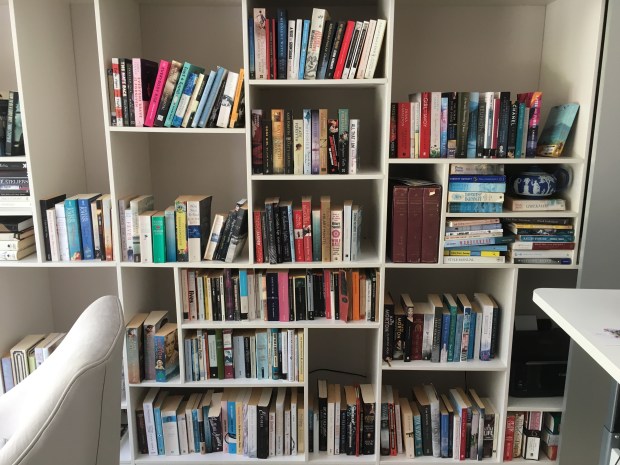
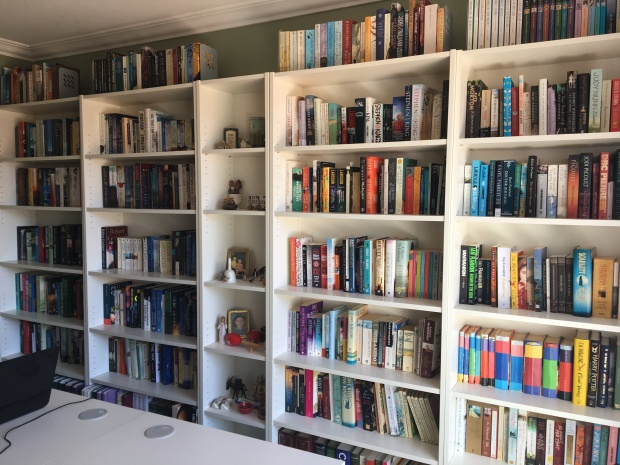
img_4450

These are just some of the book shelves in our home.

A. Most of our bookcases are in the room of our home that was originally intended as a formal dining area, but you’ll also find them in the lounge room, both of our daughters’ bedrooms, and the guest room (aka Nana’s room). My husband and I don’t have a bookcase in our bedroom (that’s up for negotiation right now), but we both have small stacks of books on our bedside tables. We’ve also got quite a collection of cookbooks on shelves above the fridge and freezer, in the kitchen, and dozens of children’s picture books stored in plastic crates, to be shared with the next generation of our family in future years.

img_4472

Some bookmarks from my extensive collection.

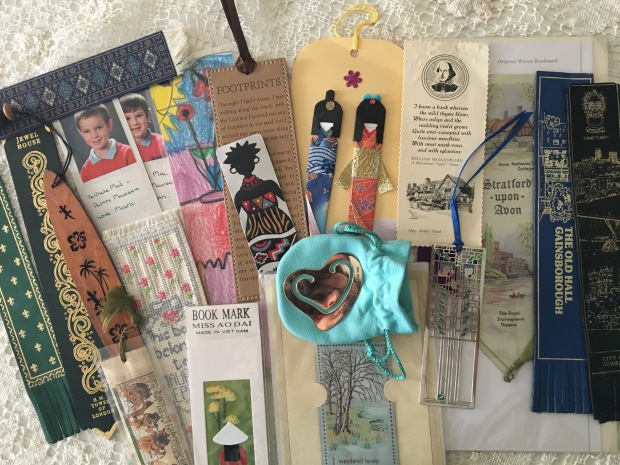
I also have an extensive collection of bookmarks from many different parts of the world, given to me by family and friends who have long recognised my passion for reading (I’ve added a photo of a small selection above).

Q. How are your books organised/arranged?

img_4453

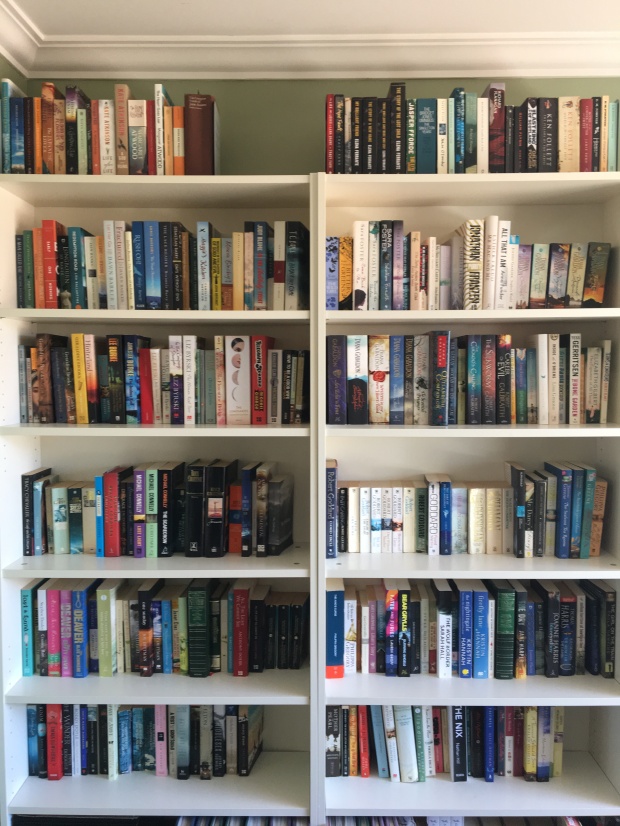
Fiction shelves from Richard Adams to Aldous Huxley.

A. Anybody who knows me well will probably correctly guess the answer to this question – alphabetically, of course! At least, the fiction, memoir, poetry and drama sections are arranged alphabetically. I’ve also got a whole bunch of writing guides, reference books and inspirational books by and about writers, all of which are arranged haphazardly (and I’m not really sure why). Perhaps that explains why my fiction writing is also somewhat haphazard…

img_4452

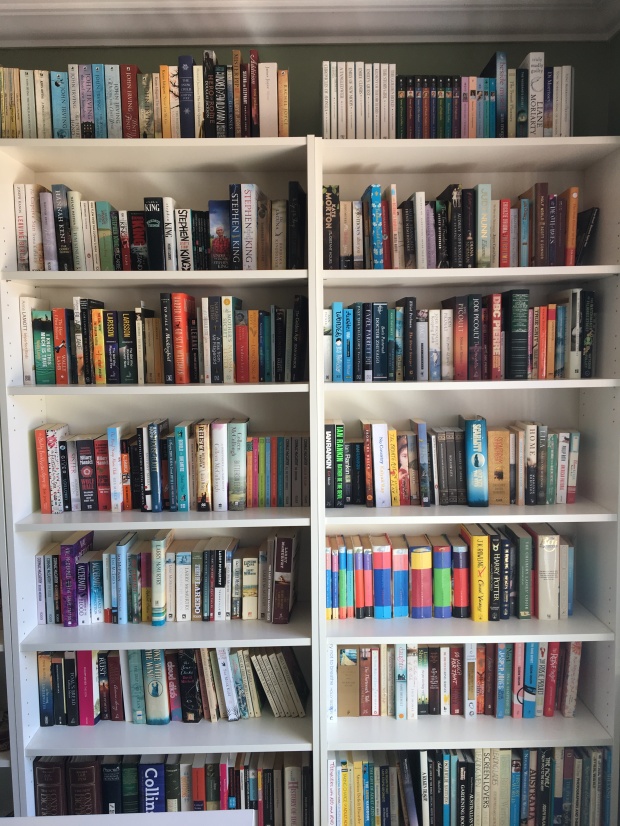
Fiction shelves from Laura Ingalls Wilder to Helen Simonson.

Q. What sorts of books predominate?

img_4462

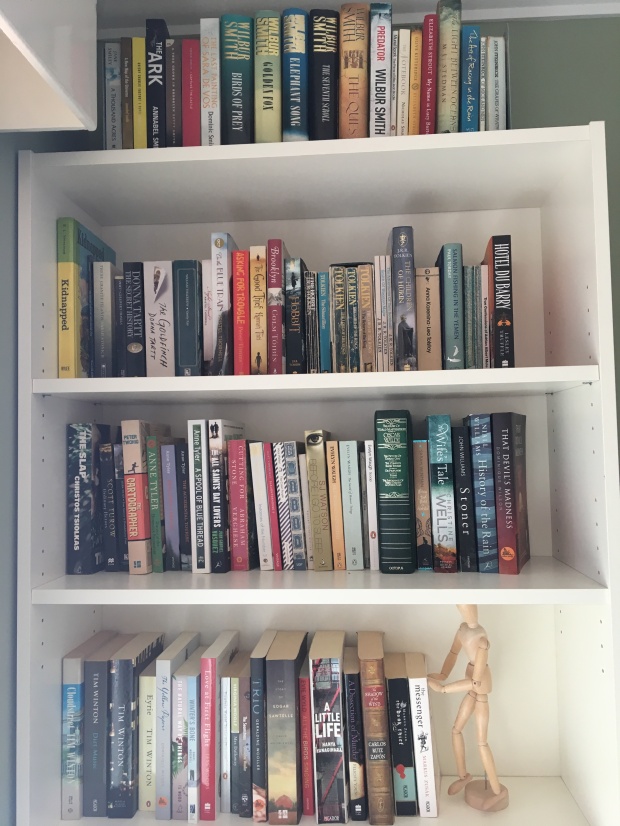
More fiction, from Jane Smiley and Annabel Smith to Markus Zuzak.

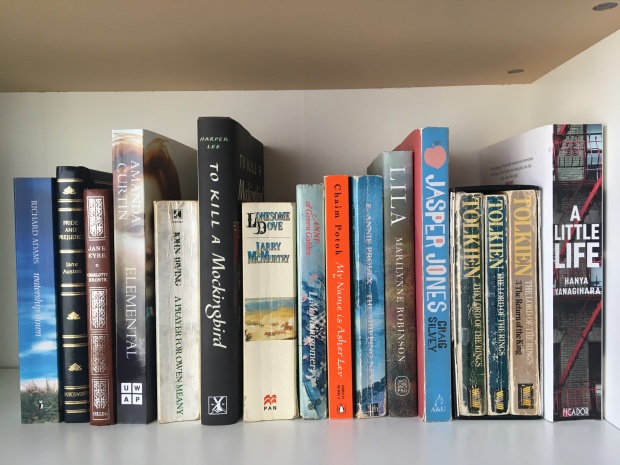
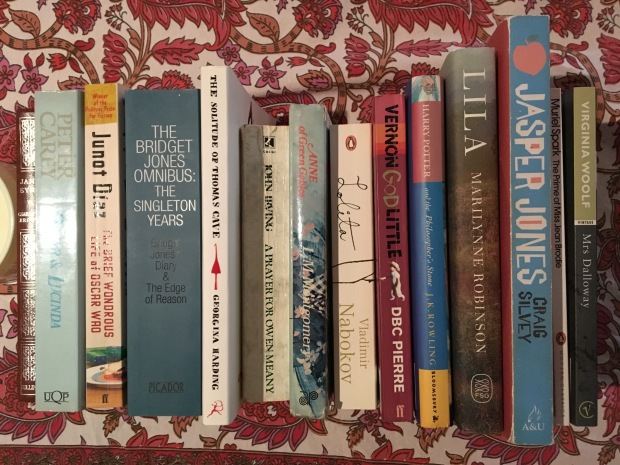
A. Most of my books are fiction, including literary fiction, some commercial fiction and some short story collections. I have two complete sets of the Harry Potter series, by JK Rowling (one hardback; one paperback), and two complete sets of the Anne of Green Gables series, by LM Montgomery. I’ve also got a full set of other fiction titles by Montgomery, but none quite matches the magic of “Anne” for me.

img_4463

These shelves are dedicated to gift books, at the top, and writing references and guides.

There are multiple titles by Larry McMurtry, who wrote the Pulitizer Prize-winning western Lonesome Dove, and there are a fair few by John Irving (including The World According to Garp and A Prayer for Owen Meany), Cormac McCarthy (No Country for Old Men and The Road, among others), and British historical thriller writer Robert Goddard, whose Past Caring is a near-perfect example of the genre. Subconsciously, I’ve also accumulated a significant quantity of novels with the Holocaust as a major or minor theme – it’s a subject of great importance to me. I’ve also got a bunch of writing references, and a collection of exquisite cloth-bound poetry anthologies, plus Shakespearean sonnets, purchased on a romantic whim.

Q. Describe your favourite reading place.

A. I can and will read almost anywhere – apart from in a car or on a bus, where I end up feeling nauseous – but most of my reading is done on the sofa in the family room, during the ad breaks (and sometimes during the programs) while the TV is on; or in bed, where I read for at least half an hour every single night – regardless of what time I head to my bedroom. Luckily, my patient, understanding husband is also a keen reader — and  he has mastered the art of falling asleep when my bedside light is on. Incidentally, my two daughters love it when I tuck a book under my arm and inform them, in my best Bridget Jones tones, that “I’m going to Bed…fordshire”. Cracks them up (not!).

Q. What book/s are you reading right now? Why did you choose that book/those books and what do you think of it/them so far?

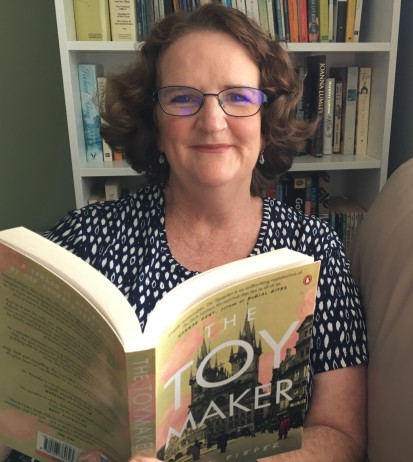
A. I’m reading two books at the moment – Magda Szubanski’s 2015 memoir Reckoning, and Liam Pieper’s compelling The Toymaker. They were chosen for me, respectively, by friends from the First Edition Book Club, in Secret Harbour, of which I’m a founding member (since 2004), and the Writerly Book Club, of which I’m an honorary member for its foundation stage. I already had copies of both books, and had been keen to read them, so I was delighted that the book clubs brought them to the top of my “to read” list. So far, both are totally engrossing – and it’s an interesting coincidence that the Holocaust is a theme in each.

Q. What are your favourite books and/or who are your favourite authors?

img_4475

My favourite novels of all time.

A. Oh dear! Once I got started with this I found it very hard to stop…  Deep breath — here goes: My long-time favourite books, which I first read many years ago, are To Kill a Mockingbird, by Harper Lee; Lonesome Dove, by Larry McMurtry; Pride and Prejudice, by Jane Austen; Jane Eyre, by Charlotte Bronte; Watership Down, by Richard Adams; and Anne of Green Gables, by Lucy Maud Montgomery. I re-read each of these novels almost every year, and still find them fresh and engaging. I should probably add The Lord of the Rings trilogy,  by JRR Tolkein, which has captivated me since I first read it, when I was 12 (and absolutely terrified of the Black Riders), and John Irving’s incomparable A Prayer for Owen Meany, whose eponymous hero’s squeaky voice is represented by the use of all capitals.

More recently, Amanda Curtin’s hauntingly beautiful Elemental captivated me from the first sentence, and I feel a deep, abiding love for the red-headed herring girl at its heart. I adore everything about WA author Craig Silvey’s Jasper Jones (the stage play is fabulous, and there’s a film version due for release on March 2). I’ve singled out Marilynne Robinson’s Lila, the third in her Iowa novels, but could just as easily have listed Gilead or Home, both of which are also sublime character studies to be read slowly and savoured. Chaim Potok’s My Name is Asher Lev was a revelation when I first read it many years ago, and I’ve recommended it to lots of friends in the intervening years; likewise The Shipping News, by E. Annie Proulx, which I still love for its quirky syntax and flawed, lovable hero, Quoyle.

Hanya Yanagihara’s A Little Life, which I read and reviewed ahead of its release a couple of years ago, deserves a paragraph of its own. It had a massive emotional impact on me: I sobbed so many times while reading it, including non-stop for the final thirty pages or so, yet I am certain it will long remain a favourite. I don’t know whether I’m quite ready to re-read it yet, as it is a devastating, heart-breaking tale, but I know that I will, and I’m confident it will continue to teach me lessons about love and friendship for many years to come.

Q. In the event of an emergency, if you could save just three books from your collection, which books would they be – and why would you choose them?

img_4470

These are the books I’d save, in the event of an emergency.

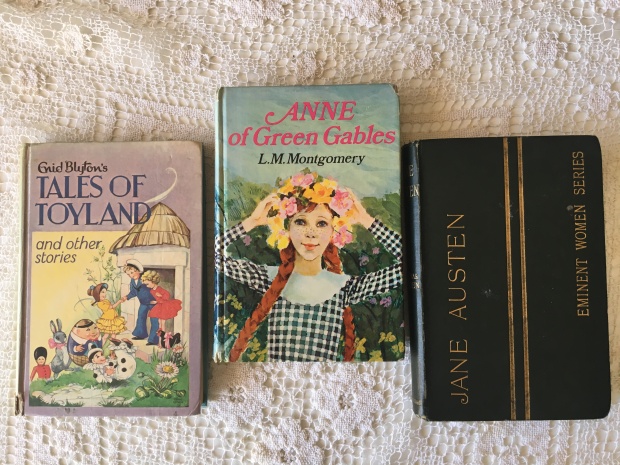
A. I love so many of my books, but this was a relatively easy question to answer: Enid Blyton’s Tales of Toyland and Other Stories, which my magnificent Mum gave to me for the Christmas just after I turned six (the first chapter book I read); my first copy of Anne of Green Gables, given to me by my Great-Uncle John (the man who inspired the Gallipoli hero in the novel I’m writing), and inscribed by him in perfect copperplate with the first few lines of Wordsworth’s “Ode to Immortality…”; and a first edition biography of Jane Austen, by Mrs. Charles Malden (sic), from the Eminent Women Series published by WH Allen & Co, in 1889, given to me by my niece, Veronica, who discovered it in a London bookstore while she and her husband, Michael, were living there.

Q. Finally, if you could sit down for afternoon tea with your three favourite characters, authors, poets or illustrators, who would they be, what would you serve them, and what would you like to talk to them about?

A. This one was a bit more difficult to answer, but I’ve gone with Anne Shirley, from the Anne of Green Gables series; Jane Eyre, from the novel of the same name; and (Jean-Louise) Scout Finch, from To Kill a Mockingbird (you can see them above portrayed on film by Megan Follows, Ruth Wilson and Mary Badham respectively). I would serve them a traditional high tea, including cucumber sandwiches (on ever-so-thinly-sliced crust-less white bread, of course), smoked salmon with sour cream and chives on tiny toast squares, mini quiches, sausage scrolls, scones with jam and cream, lemon friands dusted with icing sugar, and tiny squares of chocolate and walnut brownie (you can tell I’ve really thought this through). We’d drink copious quantities of English Breakfast or Irish Afternoon tea while discussing the historical importance of feisty females, the joys of discovering new worlds in books, and our hopes for a future where equality is reality. After several languorous hours, we might be convinced to sip a small glass (or two) of dry sherry or Champagne from paper-thin coupes.

I know they are no longer alive, but I also toyed with the idea of destroying the space-time continuum to host a separate afternoon tea with Lucy Maud Montgomery, Charlotte Bronte and Harper Lee, so I could tell them how much I adore the characters and stories they created, and ask them about their inspirations and writing habits. If I felt brave enough, I’d also ask Harper Lee what on Earth prompted her to publish Go Set a Watchman…! We’d probably sip iced lemon tea or mint juleps, and eat strawberry shortcake and pecan pie under a shady tree, and I’d ask Harper to read my favourite passages from To Kill a Mockingbird in her Alabama drawl — if my pert question hadn’t completely offended her.


#books #reading #writers #writing #goodreadingmagazine #natashalester #tracyfarr #annabelsmith #amandacurtin #hanyayanigahara #alittlelife #johnirving #owenmeany #alancarter #jenniferryan #magdaszubanski #liampieper #jasperjones #craigsilvey #marilynnerobinson #chaimpotok

Her Mother’s Secret — Review

hms-final-jpg

Her Mother’s Secret, the soon-to-be-released historical novel by Perth author Natasha Lester, is literally and figuratively a thing of beauty – and a joy to read.

Beginning in Sutton Veny, England, at the end of World War I, and moving to the bustling streets of Manhattan for a period spanning 20 years, Her Mother’s Secret chronicles the life of Leonora “Leo” East, the daughter of a village chemist, whose ambition is to create mascara, lipstick and other cosmetics to help women look and feel confident and beautiful.

At a time when many sections of society associate the wearing of makeup with prostitutes, actresses and “fast, loose” women, Leo dares to follow her dreams, even when her initial efforts to establish herself in the cosmetics business are stymied at every turn.

Leo’s passion for cosmetics is born while she works behind the counter of her father’s village chemist and apothecary during the Great War. Between helping customers with their medicinal needs, she begins experimenting with different ingredients to try to create mascara that will blacken lashes without running, and lipstick that will provide rich, lasting colour. She finds a clandestine market for her beauty products with the young army nurses stationed at training barracks in the village.

As the Armistice is called, Spanish Flu devastates the village, bringing with it personal tragedy for Leo. She makes the bold decision to join her friend Joan, an Australian nurse, and the flood of migrants seeking a better life and a chance for success in New York.

Leo agrees to travel to America as the companion of young socialite Mattie Monckton, but before embarking on the trans-Atlantic voyage she has a chance encounter with a compelling and handsome stranger, department store tycoon Everett Forsyth, to whom she is irresistibly drawn.

Twenty years later, Leo encounters Everett’s daughter Alice, whose ambitions are directed toward securing a place in a leading ballet company. The two women share a powerful connection that defies the limitations and boundaries set by Alice’s domineering, scheming mother.

Between those times, Leo devotes every ounce of her physical and creative energy toward fulfilling her goal of manufacturing and selling cosmetics, initially holding down two jobs to make ends meet and spending her limited leisure time improving her formulas, with the help of Jia, a young Chinese woman she befriends.

Leo finds another kindred spirit in artist and window dresser Lottie, and becomes embroiled in the life of wealthy businessman Benjamin Richier and his sister Faye, both of whom will have a significant influence on her success, and her future.

Like Natasha Lester’s best-selling 2016 historical novel A Kiss from Mr Fitzgerald – reissued for Valentine’s Day with a new cover – Her Mother’s Secret is meticulously researched and utterly compelling, drawing on the author’s experience working for cosmetics giant L’Oreal as the marketing manager for Maybelline in Australia.

While there’s a love story at its heart, this is fundamentally the story of one young woman’s determined and unremitting efforts to make her mark on the world and succeed within a society that initially shuns her.

Lester’s precise, detailed descriptions of the glorious fashions of the period, and all the sights, sounds and scents of the New York streets between the wars, lend authenticity to Leo’s experiences and transport the reader to a bygone era when hopes were high and opportunities limitless.

As Leo examines the exclusive Fifth Avenue shop fronts, gazes to the tops of the towering skyscrapers, and walks through the doors of the Waldorf-Astoria hotel or Elizabeth Arden’s Red Door Salon, the reader stands beside her, sharing her sense of wonder, expectation and joy.

With Her Mother’s Secret, Lester has again written a novel that combines the rapid pace, captivating characters and hopeful ending that epitomise commercial fiction, with the scrupulous attention to detail, lyrical language and critical social commentary that typify literary works.

Her Mother’s Secret, by Natasha Lester, is published by Hachette Australia, and will be released on March 28. RRP Paperback $29.99; eBook $12.99. I received an advanced copy for review.

Watch out for a guest post from Natasha on my new blog, Shelf Awareness, to be launched later this week.

My favourite books in 2016

What a delight it was to surpass my Goodreads 2016 Reading Challenge. My goal was to read 75 books and, with a few days remaining before December 31, I’ve finished 82 and hope to be able to squeeze another couple of titles in before the end of the year. I’ve encountered some excellent books in 2016, and I’d like to share my favourites here with you. 

Despite an epilogue that tied things up a little too neatly for my liking, Emma Donoghue’s The Wonder, was one of several books that prompted a five-star review from me this year. It is set in an Irish village rife with superstition and religious fervour, where an 11-year-old girl retains a tenuous hold on life despite apparently fasting for four months. A Catholic nun and an English nurse trained by Florence Nightingale commence a constant vigil, to try to determine whether the girl’s survival is a miracle. This story had me hooked from the first page and held me in its grip until its dramatic conclusion. It also had me pondering some big issues, including the positive and negative potential of faith, and how far an individual may go to try to please the people they love.

My familiarity with Agatha Christie’s body of work has been gained through films and TV series rather than through reading her books, but I was immediately drawn to On the Blue Train, by US-based Australian author Kristel Thornell. It’s an imagined account of the real-life mystery that surrounded Christie when she went missing for 11 days in 1926, after learning about the infidelity of her husband and while experiencing severe writer’s block. Reading Thornell’s story is like taking a step back in time and observing the possible motivations and events of Christie’s escape from reality.

Perth-based Rashida Murphy impressed me greatly with her debut novel The Historian’s Daughter, written as part of a PhD. Set in India, Iran and Perth, this study of family relationships, secrets and betrayal is harrowing at times, yet ultimately hopeful. Murphy’s prose is lyrical and evocative, and deserves to be savoured.

I read Everyone Brave is Forgiven, by Chris Cleave, after seeing a post about it on a friend’s Facebook page, and I remain haunted by its unique perspective on elements of World War II, including the bombing of London and the siege of Malta. Peopled with flawed yet fascinating characters I came to care for, the beauty of this book remains with me months after I finished it. I also read Cleave’s darkly compelling take on the effects of terrorism, Incendiary, in one sitting – original, devastating and timely, this is a powerful statement about contemporary life, loss and grief.

I’ve heard a lot of people talk about the quality of Colm Toibin’s writing, so this year I decided I’d take a look at his highly regarded novel Brooklyn – and I wasn’t disappointed. This is gentle, subtle, character-driven storytelling, and I cherished every page.

Tiny Beautiful Things: Advice on Love and Life from Dear Sugar, by Cheryl Strayed, also took me to some dark places, yet was ultimately uplifting and inspiring. This series of letters originally published as an online column for The Rumpus had me laughing out loud one moment, then reaching for a tissue the next. Strayed’s warmth, wit, wisdom and compassion as Dear Sugar also led me to read Wild: From Lost to Found on the Pacific Crest Trail, the inspiring and highly entertaining account of her journey of self-discovery, which Reese Witherspoon adapted into a feature film.

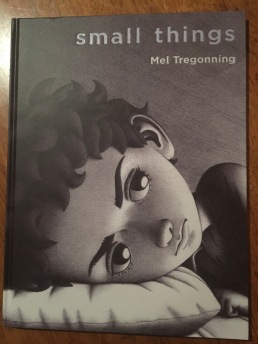
img_4244Small Things, by Mel Tregonning, is a posthumously published, large-format graphic novel that left me sobbing and bereft. Through stark, devastating monochromatic images without words, Tregonning confronts us with the reality of the “personal demons” so many people carry around within them – whether in the form of anxiety, depression, loneliness, low self-esteem or a sense of helplessness and hopelessness.

This is a vitally important book, as it has the potential to start conversations that might literally save lives.


For many years, I’ve been a consumer of writing guide books and references, and this year while continuing that trend I encountered a guide that had an immediate and positive impact on my writing life. Something about Catherine Deveny’s unorthodox, no-holds-barred approach struck a chord with me, and I am incredibly grateful to the friend who recommended Use Your Words: A Myth-Busting, No-Fear Approach to Writing. I’ve written more fiction since I finished reading Deveny’s book than I had written in the previous two years, and I’m confident I will continue to follow her advice and tips in 2017 and beyond. I’m no longer content to be a “gunna”.

Another book about writing that inspired – and delighted – me in 2016 is an anthology compiled by my good friends at Serenity Press. Writing the Dream is a collection of personal essays by writers describing aspects of their individual journeys toward publication. It has some big-name contributors, and others whose names I’m confident will become very well known in the future.

Finally, I felt incredibly proud in 2016 when a non-fiction story I wrote was published in an anthology called Let’s Face It, which aims to promote positive outcomes for people living with mental illness. My story is about how I learnt to manage the anxiety I experienced following the sudden death of an acquaintance. Stories by others reveal what it’s like to live with conditions such as post-traumatic stress disorder, bipolar disorder, depression, schizophrenia or borderline personality disorder. The anthology was part of a project through Rockingham Writers Centre, using funding from Act Belong Commit.

So, for 2017, I’ve already got a long list of books I want to read – and there will be more to add as and when they are released – but I’m also planning to devote more time to my own fiction writing. One of my creative goals for the year will be to complete a full draft of my first novel. I’ll also be further developing my website and blog, and will continue to interview authors and review books throughout the year. I can’t wait!

What were some of your favourite books in 2016? And what are you looking forward to reading in 2017?


Finding my tribe…


img_3639-1

The organising committee for the writers’ convention.

Regularly spending time with people who share my desire to create stories is one of the most valuable aspects of my fiction writing journey so far.

Armed with advice from a number of websites, text books and writing courses that recommend aspiring authors find ways to mix with other aspiring authors, I have attended writing festivals, book launches, author talks and other literary events in the last couple of years.

I’ve also become actively involved in a community-based writing centre in the suburb in which I live. And it has been enormously beneficial.

Rockingham Writers Centre was established in April 2015, as a place where people with a passion for writing in its many shapes and forms get together to socialise, network, share ideas, hone their craft and spend time writing in the company of other writers.

The volunteer-run centre presents monthly meetings for beginner and advanced writers, poets, and those keen to write children’s books or short stories. It hosts professional development courses and workshops, plus book fairs, where local writers have peddled their works, and in September hosted the inaugural, one-day Rockingham Writers’ Convention, to great accolades.

For me, talking with others who are taking steps to achieve their writing goals provides inspiration, a sense of common purpose and, most importantly, hope – hope that their successes may one day be my own; and hope that my experiences may help them with their writing.

I suspect that for my family and friends, the fact that I’m talking to other people about what I’ve written or what I want to write provides much-needed respite from my novel-writing obsession.

In moments of self-doubt, hearing how other people have pushed beyond writer’s block, achieved a breakthrough in their research, or overcome a seemingly insurmountable structural obstacle can be invigorating and motivational.

Members of the group who are already published – whether traditionally, through self-publishing, or online – are willing to help the rest of us to benefit from the lessons they’ve learned, and to avoid pitfalls.

And those like me, with expertise and experience in media, marketing and editing, have been able to offer advice and direction, with the ultimate goal of helping writers find readers and buyers for their books.

Right across Australia, community based writing groups offer similar services, facilities and opportunities. But if there isn’t one in your neighbourhood, consider taking a leaf out of my book – and get involved in establishing your own.

A version of this post was originally published as The Neophyte Novelist column in Good Reading.

Let’s Face It…

img_3803

On the last day of second term in 2007, the mother of one of the girls in my daughter’s Year 4 group dropped her children at school. It was the last time they saw her alive. She drove about five minutes to her home, where she collapsed and died from a previously undiagnosed cardiac condition. This kind and considerate wife and mother had no warning that her life would be cut short, and her sudden death shocked and devastated all who knew her. In me, it triggered an acute level of anxiety that was unprecedented, overwhelming and debilitating, and which continued to have a profound impact on my everyday life for a number of years after her death.

The story of my journey toward recovery from mental illness is one that might be described as ‘ordinary’. Anxiety is, according to the experts at beyondblue.org.au, the most common mental health condition in Australia. On average, one in four people–that’s one in three women, and one in five men–will experience anxiety. The condition comes in many different forms, each with a range of specific symptoms. In sharing my story, I hope to raise awareness of some of the ways in which this condition can have an impact on individuals. Perhaps somebody will recognise some of their own symptoms in those I describe–although, of course, every person’s experience of anxiety is unique and personal…

 The above is an extract from an essay I wrote for an anthology of personal stories by people living with mental illness. The anthology, called Let’s Face It: Stories by People Living With Mental Illness, also features personal accounts by seven other people who have experienced or are continuing to experience some form of mental illness, including depression, bipolar disorder, post-traumatic stress disorder, borderline personality disorder, obsessive-compulsive disorder and more.

The anthology was published as part of a project undertaken by Friends of Rockingham Arts Community (FoRAC), through its associated groups, Rockingham Writers Centre and Rockingham Ceramics Studio. In addition to the anthology, the Let’s Face It project included an exhibition of more than 250 hand-crafted ceramic masks, all designed to promote positive outcomes and recovery from mental illness.

The entire project was the brainchild of FoRAC Manager Bec Thomas, who wanted to raise awareness of mental illness within the community in a positive way, and highlight the ways that being involved with community groups and organisations such as the Rockingham Writers Centre or the Rockingham Ceramics Studio can contribute positively to the mental health of individuals. Bec was teacher and mentor for the dozens of people who created the masks, and she enlisted the help of authors Teena Raffa-Mulligan and Claire Boston to act as mentors for the writers who contributed to the anthology. I was lucky to be able to proofread a version of the final document before its publication, and I could not have been prouder of my fellow contributors, who range from a 21-year-old university student to a published author in her seventies. Some contributors had never written anything for publication previously.

While my 30-plus years as a journalist and editor certainly came in handy while I was writing my story, I hadn’t written about such a personal subject before, and recalling the events that led to my anxiety attack in 2007 reminded me just how far I’ve come in learning to manage my mental health. These days, if I start to feel stressed or anxious, I know I have several techniques I can use to turn my thoughts around, including one of the most effective management techniques for me – physical exercise. I get out for a short run several times each week, usually with my boxer dog, and have participated in a number of fun runs, including two half-marathons. I’ve also been a regular yoga practitioner since the events of 2007 – although a shoulder injury has kept me from my yoga practice in recent months. I’m determined to start back again as soon as I can, as it has an enormous impact helping me to maintain a sense of calm contentment – with the bonus of strengthening my bones and muscles and helping me to tune into my thoughts and feelings.

img_3777-copy-2The Let’s Face It anthology and exhibition were funded by Act Belong Commit, with support from Healthway, Parkin Print and the City of Rockingham, and published by Rockingham-based independent publisher Serenity Press. The anthology and exhibition were launched on October 8, to mark the start of Mental Health Week here in Australia. The exhibition continues at Rockingham Arts Centre, 11 Kent Street, Rockingham from 9am-4pm daily, until October 16, 2016. Copies of the anthology are available by donation at the exhibition, or can be ordered here, through publisher Serenity Press. All profits from the sale of the book will help people living with mental illness to participate in art courses or workshops through FoRAC.
If you or someone you know is facing mental illness, this book may provide some valuable insights into the way these different conditions impact on the lives of individuals, their families and friends. In revealing the ways that the authors have learnt to accept and manage their particular conditions may also offer some hope to those affected by mental illness.


What’s in a name…?

img_3698

Romeo Montague, Elizabeth Bennet, Huckleberry Finn, Anna Karenina, Atticus Finch, Scarlet O’Hara, Holden Caulfield, Hermione Granger, Owen Meany and Garp.

Those are some pretty compelling names for fictional characters. Some long familiar, others more recently introduced to our collective consciousness.

How can I possibly come up with names for my characters that are at once authentic and memorable, like Anne Shirley or Harry Potter, or distinctive and unforgettable, such as Albus Dumbledore or Daenerys Targaryen?

I have spent many, many hours pondering the possibilities. In the car after dropping my daughters at school; while waiting for a doctor’s appointment; even out running, with or without my canine companion. And, far more often than is good for me, I’ve found myself contemplating the options in the wee small hours, when everyone else is sound asleep.

img_3702

I’ve compared books of babies’ names with an old copy of the White Pages, trying to combine first and last names in a way that clicks. I’ve roamed library aisles, wondering whether I could get away with linking the first name of a celebrity chef with the surname of a metaphysical poet.

Many suggestions from my book club chums were either outrageous or disgusting, but I may yet end up calling the strict school principal June Broomhead. Betty Beaver, however, definitely won’t be making an appearance in my manuscript.

Then I heard about the name generator function in Scrivener (the novel-writing software), which allows writers to set parameters for the names they seek – such as gender, ethnic origin, first name meanings – and click to create a list of possibilities.

Sounds brilliant, right?

The only problem is, my initial searches have predominantly produced names that are so quirky, idiosyncratic and original that I can’t imagine any of them being given to a girl growing up in a blue-collar suburb of Perth in the 1970s. Barnabas Bel and Musa Demanche sound more like Hogwarts students than freckle-faced bookworms trying to outwit a bully.

So, my task is to write descriptions of each of the key characters I’m creating, and then try to find some way to give each of them a convincing name. It’s time.

I suppose, if you think about it, some of those names at the top of this post may not have sounded quite so convincing when they were coined. It’s really only their familiarity that makes them seem, well, real. So perhaps there’s hope for Barnabas Bel yet…

Originally published as The Neophyte Novelist column in Good Reading.