Shelf Aware — Nadia L. King

File 18-1-17, 6 00 49 am

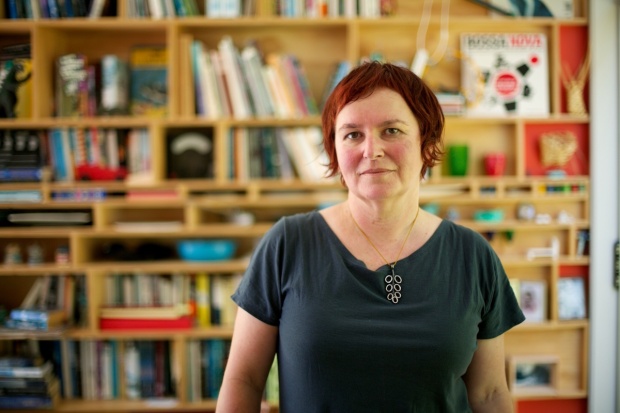
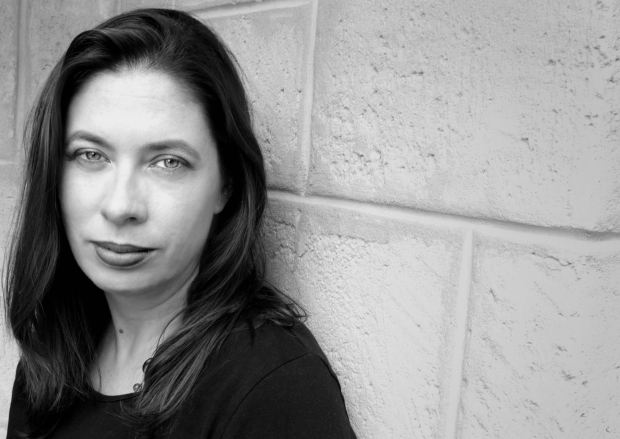
Author Nadia L. King. Photo: Louise Allan

When I was asked to compile an end-of-the-year roundup of books that made an impact in 2016, Perth author Nadia L. King’s debut Young Adult novel, Jenna’s Truth (Aulexic), was right at the top of my list. It’s a powerful and poignant anti-bullying story that raises awareness of the insidious impacts of bullying in contemporary times, particularly the effects of cyberbullying. It also deftly, sensitively and honestly raises the themes of teen drinking, sex and suicide. Written as a heartfelt response to the tragic death of Canadian teenager Amanda Todd, Jenna’s Truth is a book that should be read by every pre-teen and every teenager — as well as their parents, and their teachers.

Nadia was born in Dublin, Ireland, and now calls Australia home. She has a background in journalism and media relations and has written for magazines in Europe, Australia, and the US. On her website, Nadia readily admits she “reads voraciously and enthusiastically and inhales books the same way her Labrador inhales dog biscuits”.

I feel honoured to have Nadia as a guest on my blog today. She is an author whose storytelling brings hope to young readers and is, literally, saving lives. I’m sure you’ll enjoy her responses to my questions, including finding out what she’s working on next.

Q. Nadia, how would you describe the work that you do, and how you do it?

A. I’m a blogger, reviewer, author, and short story writer. A million years ago, I started out as a journalist and I worked in corporate communications and media relations for about a decade. Now I try to write fiction.

Q. What is your latest project, and/or what do you have in the pipeline?

A. I’m currently in the research and planning phase of my second book. It’s a YA novel and the story is centred around seventeen-year-old Jack, whose obsession is manga and graff. Jack hasn’t quite worked out who he is or where his sexual orientation lies. I obviously have to work on my blurb!

Q. Where are the main bookcases in your home or office? Do you also keep books in other places at home (or elsewhere)?

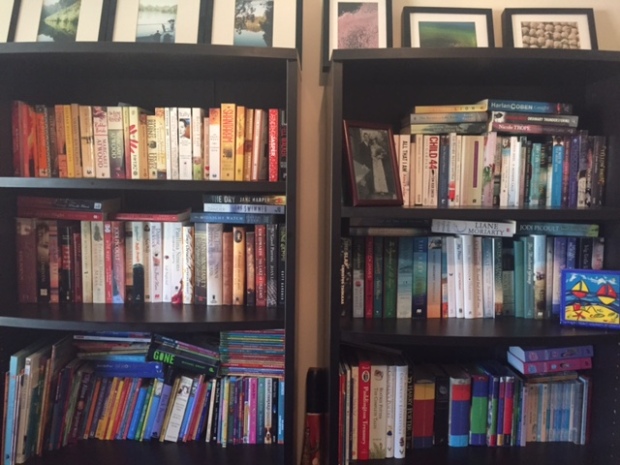
A. Although I have a large number of books on my Kindle, nothing beats holding a physical book in your hands. Alas, our home lacks a library but we have a large bookcase in the hallway by the stairs. There are a few other bookcases around the house but there are many more piles of books. Thank goodness my husband isn’t too bothered by the growing piles of books which seem to spring from nowhere.

Q. How are your books organised/arranged?

A. I would love to impress you with my organisational skills. I have a loose system of organisation. Actually, confession time — it’s so loose it’s basically non-existent. I try to keep all my poetry books, my short story collections, and books by each author grouped together but ultimately space dictates where each book lives. I have been known to jam books wherever they will fit.

Q. What sorts of books predominate?

A. Classics and general fiction predominate in my collection. I’m also interested in history and art so there are quite a few books from those topics on my shelves or in piles ;). I have a collection of Daphne Du Maurier’s works, a 1906 collection of Dickens’ writings, and a complete set of The Masterpiece Library of Short Stories — The Thousand Best Complete Tales of all Time and all Countries which I think is dated around 1920.

Q. Describe your favourite reading place.

A. I can read anywhere but my favourite place to read is on my bed. Usually with a few pillows behind my head and one of our cats by my side. I read every day without fail.

Q. What book/s are you reading right now? Why did you choose that book/those books and what do you think of it/them so far?

A. I’m currently reading three books. Through an online book club, I’m reading Cervantes’ Don Quixote for the first time. I have read precisely two pages so I can’t illuminate you on my reading but I can say I’m rather intimidated by the book; both by its size and age (it was written over four hundred years ago).

This week, the lovely people at Text Publishing sent me an advance copy of Night Swimming by YA author, Steph Bowe. It’s a coming-of-age story and deals with complex issues but it also has crop circles, a girl who loves her goat, her family and her best friend, who is intent on putting on a musical in the small rural NSW town in which they live. I’m about a quarter of the way through and I am loving it.

Father Christmas brought me Murakami and Ozawa’s Absolutely on Music. I am an adult learner of the piano and have zero musical education so I’m really enjoying
Murakami’s interviews with the Maestro which cover everything from Beethoven to pop-up orchestras.

Q. What are your favourite books and/or who are your favourite authors?

A. My favourite books are Norwegian Wood by Haruki Murakami and Jane Austen’s novels. Last year, I read The Bell Jar by Sylvia Plath and it left me bereft so it’s way up there with my favourite books. I simply adore Australian author, Favel Parett’s writing and her book Past the Shallows is a must-read for all literate humans!

Q. In the event of an emergency, if you could save just three books from your collection, which books would they be – and why would you choose them?

A. I have a Folio collection of Jane Austen’s novels in a cardboard sleeve which lives on my desk and that would be my first pick in a house-fire. I also have a large volume of That Glimpse of Truth: 100 of the Finest Short Stories Ever Written and I would be tempted to try and grab that as I raced out. By that stage, my hands would be so full I’m not sure I could carry anything else!

Q. If you could sit down for afternoon tea with your three favourite characters or authors, who would they be, what would you serve them, and what would like to talk to them about?

A. One of my fantasies is to drink champers with F Scott Fitzgerald and I admit to being slightly obsessed with Ernest Hemingway. One day, I would also love to meet Haruki Murakami and Favel Parret. If we could use the Tardis and get all these brilliant writers together I would serve bubbles, pink Gin, smelly French cheese, apples, sushi, and Japanese cakes. I’m not sure how they would get on, or if they would like my selection of food, but I would love to grill them on self-doubt, the writing process, and how writers should use Twitter. I can imagine Fitzgerald and Hemingway getting into a fight and both demanding hard liquor (they apparently had an ambivalent friendship). I would probably corner Murakami at some point and ask him to look over my outline for Jack’s story!

Follow Nadia on Instagram , Twitter, and Goodreads.

#nadialking #jennastruth #yafiction #aulexic #teenagers #cuberbullying #suicide #australianwomenauthors #irishwriters #shortfiction

Shelf Aware — Rashida Murphy

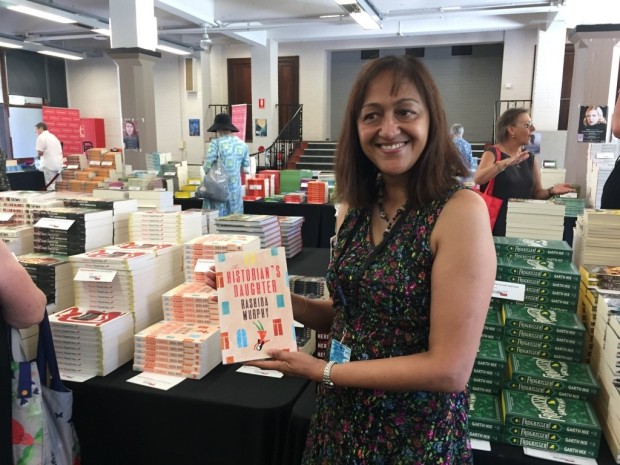
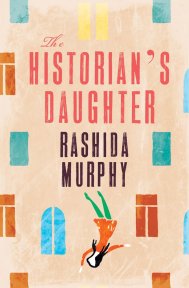
RashidaThe first time I read the blurb for Rashida Murphy’s debut novel, The Historian’s Daughter (UWA Publishing), I knew this was a book I’d love:

“In an old house with ‘too many windows and women’, high in the Indian hills, young Hannah lives with her older sister Gloria; her two older brothers; her mother — the Magician; a colourful assortment of aunts, blow-ins and misfits; and her father — the Historian…”

Little did I know that the woman who wrote these alluring lines would also be a gentle soul and a kindred spirit — a softly spoken individual, with a heart filled with compassion and kindness, and an unwavering commitment to inclusion, diversity and equality.

Written as part of a PhD, The Historian’s Daughter is one of those novels that gently lulls you with the beauty of its language and sentence structure, with a compelling plot, and characters who are at once completely original yet recognisable from personal experience. Underneath the beauty of the writing, though, is a haunting story of secrets, lies, jealousies, love, loss, family and, finally, a sense of hope and self recognition for protagonist Hannah. I cannot recommend it highly enough, particularly to readers who value writing that is precisely evocative, emotionally satisfying and thought-provoking.

As her website reveals, Rashida’s short fiction and poetry has been published in various international literary journals and anthologies, including the Westerly, Open Road Review, and Veils Halos and Shackles. In 2015, The Historian’s Daughter was shortlisted in the Scottish Dundee International Book Prize, and in 2016 Rashida was a guest editor at the Westerly and Books Editor at Cafe Dissensus.

Rashida has a Masters in English Literature and a PhD in Writing from Edith Cowan University. She has taught ESL (English as a Second Language) and worked as an education lecturer. In 2016 she was the joint winner of the Magdalena Prize for feminist research for her thesis, which includes The Historian’s Daughter. Rashida lives in Perth with her husband and “visiting wildlife”.

As you will see, Rashida’s responses to my Shelf Aware questions reflect her passion for quality literary fiction, her innate intelligence, her genuine warmth and a delightful wit. As a tale about mother-daughter relationships, The Historian’s Daughter would be a perfect Mother’s Day choice for those who appreciate a story that will enfold them in its portrayal of family life, with characters and a plot that will remain long after the final page is turned. Enjoy!

Q. Rashida, how would you describe the work you do and how you do it?Rashida Historian_s_Daughter_Cover_1024x1024

A. It’s taken me a while to own this reality – I’m a writer and I write. Badly on some days, occasionally well, and sometimes I even finish a whole piece – usually a story, poem or essay. Most of the pieces I’m happy about arrive whole, which means I write them in a single day, over a few hours. The ones that trouble me most are the stories that I think are great, only to have them rejected by a few journals. Then there are some that are almost but not quite there and I especially like these – they trouble me, haunt me and won’t leave me alone. That sounds masochistic, but I think anyone who writes must admit to a melancholy sort of masochism occasionally.

Q. What is your latest project and/or what do you have in the pipeline?

A. I’m working on my second novel, tentatively titled, Leaving Canterbury, and I’m not sure where it’s going at the moment. I’ve got about 25,000 words and I’m enjoying it in a way I didn’t enjoy The Historian’s Daughter. Trust a PhD to take the fun out of writing. I’m also working on essays and short stories and poems. I need to do this while I write a longer work. I noticed that when I was trying to ‘just’ write a novel. The most productive period for me seems to be when I ought to be writing The Great Indo-Australian Novel – stories and poems burst forth from the confines of my confused mind.

Q. Where are the main bookcases in your home or office? Do you also keep books in other places at home (or elsewhere)?

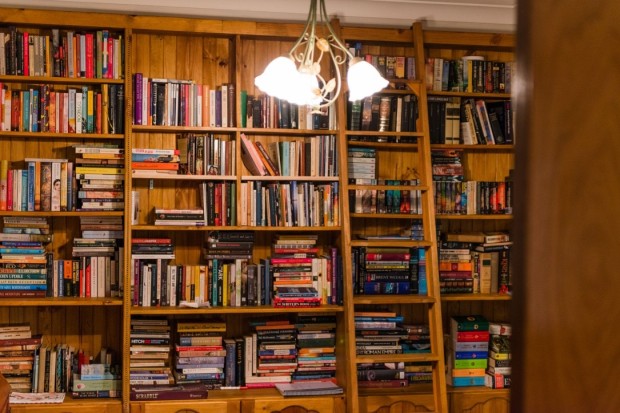
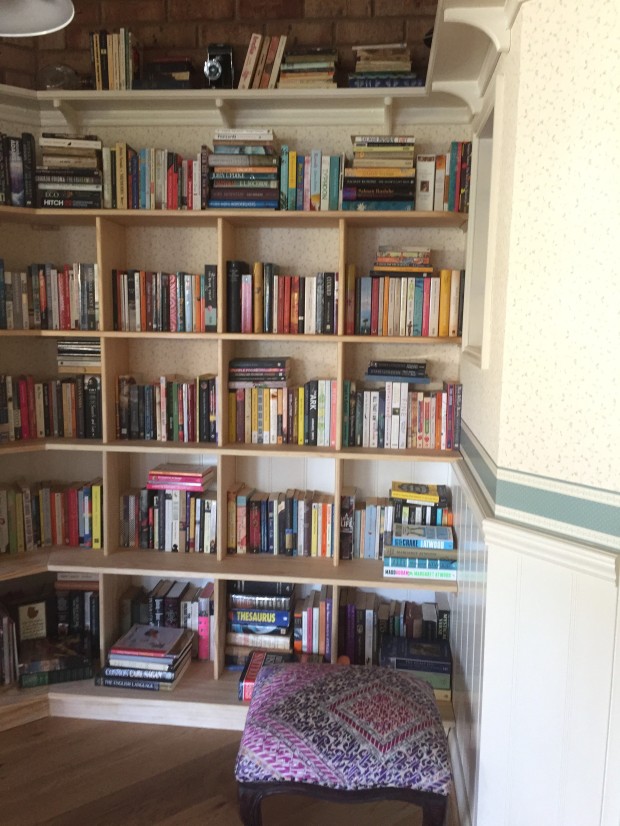
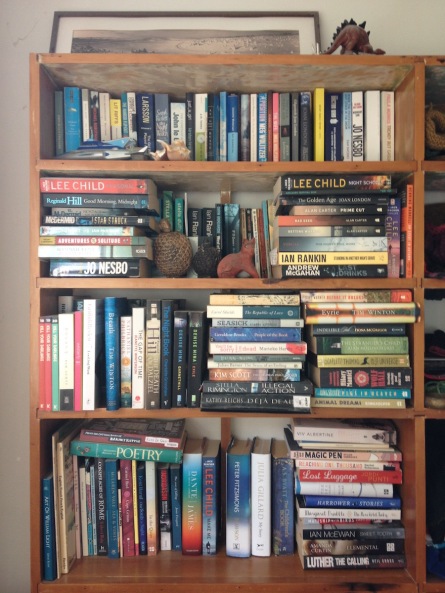
A. My books are everywhere, especially at the moment. We’ve moved homes from north to south, and my books are waiting for shelves.* Here’s a picture of my former bookshelf, built by my clever husband who actually just got tired of buying me bookshelves every year. It held over a thousand books. Sadly, I had to leave it behind.Rashida shelf 1

At the present time, most of my reference and beloved books are unpacked and stacked wherever I can find space. I have journals that I think I collect because they are beautiful, although I do occasionally use them. This is my current study.

Q. How are your books organised or arranged?

A. I arrange books by geography and gender. My largest collection is Australian and Indian women writers, followed by the men. I worried for a long time about putting the Irish next to the English but figured John Banville and James Joyce wouldn’t really mind sitting next to D.H. Lawrence and Thomas Hardy. Ditto with the Russians and Hungarians but Garcia Marquez seems to like Salman Rushdie, who likes William Dalrymple – you understand my confusion? Poetry has its own shelf and is not divided, so Sylvia Plath and Ted Hughes and Leonard Cohen cohabit comfortably alongside T.S. Eliot, Annamaria Weldon and Adrienne Rich.

Q. What sorts of books predominate?

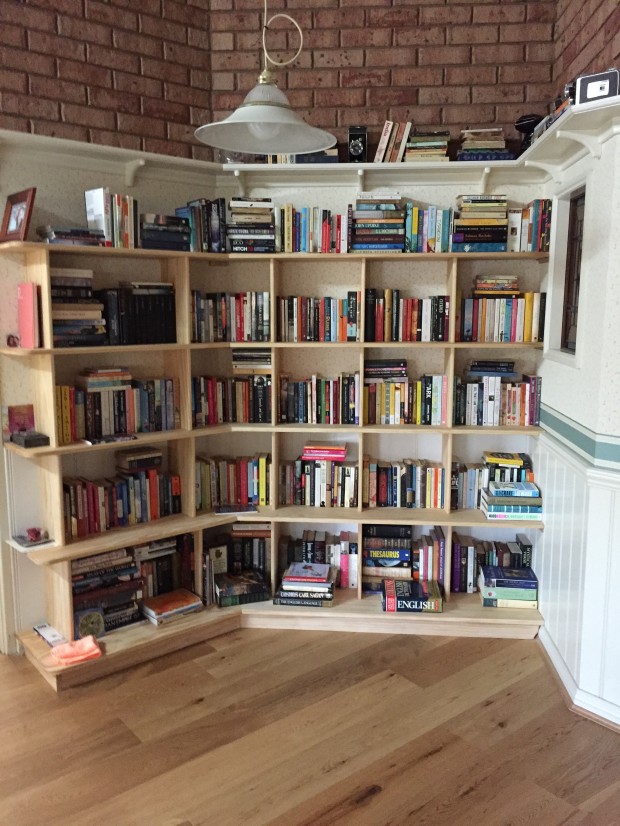
Rashida new shelf 2

Book shelves at Rashida’s new home.

A. It’s an eclectic collection simply because I allow my husband’s books to live on some of my shelves. He reads science fiction and builds daleks in his spare time. Occasionally he sneaks one of his books into my collection just to see if I notice. I do. And evict the offending book promptly.

Rashida new shelf

Literary fiction by women dominates my shelves, followed by poetry, history and reference books. I have a lot of books about books with fabulous titles like Trafficking In Old Books, Negotiating With The Dead, The Superior Person’s Book of Words and Eats, Shoots and Leaves. My daughter gave that last one to me and this is what she wrote inside: ‘To my mother, whom I hold responsible for my anally retentive habit of always noticing bad grammar, and assuming that the creator of bad grammar is ignorant. Also, I’m sure that my tendency to create glorious, nonsensical words originates in maternal mistreatment during childhood. Anyway, love you heaps.’ Naturally it’s all perfectly spelled, in neat writing, with commas included.

Q. Describe your favourite reading place.

A. I read everywhere, usually on the couch in the lounge, in my study, on the train, while waiting for someone. I have a book in the car, in my bag, on tables scattered throughout the house. I usually read several books at the same time, except when a book is so fierce it won’t leave me alone and I devote all my time to it.

Q. What books are your reading right now? Why did you choose those books and what do you think of them so far?

A. I’ve got a stash of books from the Perth Writers Festival that I hope to get into later this year. Currently I’m reading two books by Alberto Manguel, The Library at Night and A Reading Diary. I’m loving both. Manguel is a writer I pick up and put down and think about, so I’m also reading poetry by Susan Varga and Amanda Joy and intend to start reading Clementine Ford’s Fight Like a Girl and Madeleine Thein’s Do Not Say We Have Nothing. I have a 50-page rule with books. If it hasn’t gripped me in 50 pages, I leave it and start another. Sometimes I do go back and read it anyway and call it research. I sound like a grasshopper, I know, but really, I’m quite calm and almost human.

Q. What are your favourite books and/or who are your favourite authors?

A. This question would take me about an hour to answer in detail so I’ll stick with contemporary writers for the sake of brevity. I read everything by Kate Atkinson, Kamila Shamsie, Zadie Smith, Margaret Atwood, Salman Rushdie, Nadeem Aslam, William Dalrymple, Helen Garner and Amanda Curtin. That said, I much prefer Rushdie’s earlier works. Midnight’s Children still rates among my top 10 books of all time and The Enchantress of Florence was quite wonderful, unlike the much maligned and rather boring Satanic Verses.

Q. In the event of an emergency, if you could save just three books from your collection, which books would they be — and why would you choose them?

A. I’d prefer to go down with my books than leave them. However, I’d pick the first book my husband bought for me, Harry Potter and The Philosopher’s Stone, with the inscription, “For a little magic in your life”, and Far From the Madding Crowd, by Thomas Hardy, because I’m in love with Gabriel Oak. And I’m sure I’d find room for three others, Amanda Curtin’s Elemental, The Collected Poems of T.S.Eliot and The Douglas Adams Omnibus.

Q. If you could sit down for afternoon tea with your three favourite characters or authors, who would they be, what would you serve them, and what would you like to talk to them about?

A. I’d definitely sit down with Heathcliff from Wuthering Heights for a cuppa, although I imagine a stiff Scotch would probably serve him better. I’d ask him if he would consider me an adequate replacement for Catherine, then, if he said yes, get as far away from him and his moors, because, you know, he’s crazy. I’d love to sip tea with Hiroko Tanaka, who survives the Nagasaki bombings in Burnt Shadows. Kamila Shamsie’s exquisite book begins with this haunting sentence: “Later, the one who survives will remember the day as grey.” And finally I’d invite Jeanette Winterson on a quiet evening walk by the Swan River and chat to her about being happy and being normal and how her mother thought stories were dangerous.

Website:
https://rashidawritenow.wordpress.com/

#rashidamurphy #uwapublishing #thehistoriansdaughter #literaryfiction #australianauthors #australianwomenauthors

Shelf Aware — Tracy Farr

Tracy-Farr-2016-Photo-by-Grant-Maiden-01-email

When I interviewed New Zealand-based Australian author Tracy Farr for The West Australian and Good Reading magazine earlier this year — ahead of the release of her second novel The Hope Fault (Fremantle Press) — it was like being reunited with a long lost chum. We chatted for more than two hours, about the exquisite prose of the new novel (she was modest and gracious in response to my compliments); the beauty of the area in Western Australia’s South West that provided the inspiration for its setting; and the importance of family, especially, as Tracy said, “extended, messy, non-linear family”.

While her first, critically acclaimed, novel The Life and Loves of Lena Gaunt chronicles the experiences of a passionate, self-absorbed individual across several decades, The Hope Fault focuses on relationships among an ensemble of characters, who are confined to a house and its surrounds for just three days. A secondary storyline offers a backward glimpse, in fragments, at the life of the family matriarch, nearing her 100th birthday.

Inspired in part by a scientific bulletin about a geological fault line in New Zealand’s South Island, The Hope Fault is a subtly deceptive depiction of everyday life, in which it seems at first that nothing much happens, yet so much is going on beneath the surface. Again in Tracy’s words, “It’s a novel about family and, in particular, about steps and exes and in-laws and aunties and fairy godmothers. And it’s very much about parents and partners who are missing, and the people who replace them.” In my words, it’s “a slow-burner that leaves the reader contemplating its many implications long after the last page is turned”. In case you can’t tell, it’s a beautiful story beautifully told.

When I invited Tracy to be a guest on Shelf Aware, I knew that she would put a great deal of time and thought into her responses to my questions, and into her selected photos. As you will see, I wasn’t wrong. I know you’ll enjoy this opportunity to get to know a little bit about Tracy Farr through what she loves to read, and what she holds dear. And, just as a timely reminder, books make excellent gifts for Mother’s Day — especially when the central character is a mother. Enjoy!

Q. Tracy, how would you describe the work that you do and how you do it?

A. I collect, find, chase, and make connections between ideas and words and things, and puzzle them into stories – mostly novels, but also short fiction.

Q. What is your latest project, and/or what do you have in the pipeline?

A. My second novel, The Hope Fault, was published in March, so I’m enjoying the ride and keeping busy – interviews, reviews, events – as the novel finds its way out into the world. This means I’ve been neglecting my third novel, but I’m hoping and planning to get solidly stuck into it this month, once I have a clear schedule. The third novel is in its very early stages, but I’d describe it (so far) as a novel about three sisters, identical triplets, born in an amusement park in the early twentieth century.

Q. Where are the main bookcases in your home or office? Do you also keep books in other places at home (or elsewhere)?

Wall-of-books-1

A. Our house is small, tall and skinny with lots of stairs, and the living space is open plan, with not a lot of wall space for bookshelves. So, piles of books accumulate on tables, floor, stairs, sofas – basically any flat (or not so flat) surface. There’s one very pleasing wall of books in the living room, on shelves we had made for the space about five years ago. High shelves in the kitchen hold my cookbooks.

Downstairs, there are bookshelves in my writing room (aka the spare room), and a big old 1940s cabinet that was removed from the wall of our kitchen ten years ago is now a good-sized bookcase in our bedroom. There are more bookshelves in the shared space upstairs next to my son’s bedroom, though the books there are all shelved two or even three deep. We really need to find space for some more bookshelves (and/or get rid of some books).

Q. How are your books organised/arranged?

A. I’d love to be able to tell you otherwise, but our books are organised very badly, or not at all. I seem to operate in two modes: obsessively organised, or explosively messy, and at the moment I’m in a very random and messy phase with books (time to get obsessive!). Books are pulled from shelves (to read, to look something up), then end up in a pile with who-knows-what other unrelated books. The piles (and shelves, and boxes) of books waiting to be read are becoming overwhelming. In my ideal world, though, books’d be organised into fiction (alphabetical by author, with some themes or collections) and non-fiction (loosely by subject) shelves.

Q. What sorts of books predominate?Bedroom-shelf-1

A. Fiction predominates, and I guess you’d call it mostly literary fiction, though crime fiction is well represented. It’s mostly novels, though there are short stories and poetry collections, and plays that mostly date from my uni days; some graphic novels, too. There’s a lot of writing from the three countries I’ve lived in: Australia, Canada and New Zealand. Tracy-Farr-2013-creditLianeMcGee-168

Our non-fiction books lean mostly towards either science or music, with sidelines in film, art, architecture, popular culture, biography. I’ve accumulated some writing reference books, mostly writers writing about writing, though for those I still often dip into what’s in the public library. There are always library books in our house.

Q. Describe your favourite reading place.

A. My favourite reading place is anywhere I can surround myself with pillows and put my feet up, with my cup of tea (and the teapot, for refills) within reach. I love reading in bed (especially in the daytime), or on the sofa. I also love reading outside, especially when it’s cold and I can rug up in uggies and hat and scarf; we have a good space for that at the back of our house, snug and protected from the Wellington wind, where I often read and write.

Q. What book/s are you reading right now? Why did you choose that book/those books and what do you think of it/them so far?

A. I stayed in bed this morning and finished reading Grief is the Thing with Feathers, a slim slip of a book (only about 110 pages, with generous spacing), by Max Porter. It’s a novel, though it feels and reads like a long poem, or a collection of poems. It’s very beautiful, very sad, very funny. I’ve been wanting to read it for ages, and finally bought it for myself a week or so ago, as a treat. Auckland Writers Festival is coming up in the middle of May, so before then I’ll be reading writers I’m in session with (including Susan Faludi, whose memoir In the Darkroom is next on my reading list), or am keen to see (like George Saunders).

Q. What are your favourite books and/or who are your favourite authors?

A. I always go blank when faced with that question, as if it’s too big a concept to consider, so this is an answer for today, for now, not for always. I would read anything Helen Garner wrote – I’d read her shopping lists! – and I love her non-fiction writing, but her fiction (those slim wee books, like The Children’s Bach) is most special to me. I’ve been obsessed with Deborah Levy’s novel (yet another slim one) Swimming Home for some years – I can’t work out why I love it, but I do. An old favourite is Carol Shields’ The Republic of Love.

I return often to A.S. Byatt’s novels (Possession is a favourite). Kirsty Gunn is another writer whose work I love – The Big Music is magnificent. Joan Didion’s book (would you call it memoir?) The Year of Magical Thinking is beautiful and wonderful, measured.

Last year was a year of discoveries, catching up on great writers I’ve somehow missed, like Ann Patchett (Bel Canto, Commonwealth, and her essays and memoir), Elizabeth Hay (A Student of Weather, His Whole Life); wonderful collections of short stories by Elizabeth McCracken (Thunderstruck) and Lucia Berlin (A Manual for Cleaning Women). And closer to home, last year I was sideswiped (in a good way) by the beauty and wonder of Stephen Daisley’s novel Coming Rain, and moved, astonished and delighted by Sarah Laing’s graphic memoir Mansfield and Me.

Q. In the event of an emergency, if you could save just three books from your collection, which books would they be – and why would you choose them?


A. First would have to be my dad’s childhood copy of A.A. Milne’s The House at Pooh Corner (2nd Australian edition, published 1944) (I’d sneak in his copies of Winnie the Pooh and Now We Are Six, too). I’ve been holding this particular book in my hands since I was very young, and it’s so very familiar to me, and very precious. My grandmother inscribed it ‘With loving Xmas wishes from Mummie and Daddy Xmas 1945’; Dad stamped his name in it as a child; and I copied him, writing my own name (and arrows; why the arrows?!) in pencil – the closest I got, even as a very small child, to defacing a book.

I might save my slim copy of Helen Garner’s Postcards from Surfers, particularly now that it’s inscribed by Garner (in the signing queue at Auckland Writers Festival I 2015; I never did manage to introduce myself properly and have a natter other than in the queue, to my regret). I bought the book in Nedlands in 1989, and it was one of just four books I took with me at the start of seven months backpacking. I started reading it in Paris (starting, of course, with the story titled ‘In Paris’) on the first night of my great adventure, eked out its reading over weeks, read and re-read it. I carried it with me for months, and couldn’t bear to swap it at a youth hostel. I sent it back home in a box of treasures, posted from (I recall) somewhere in Greece, perhaps the island of Sifnos.

For the third, I’d be tempted to grab my reading copy of The Life and Loves of Lena Gaunt. It’s getting tattered, but I’ve annotated (in pencil and sticky notes – I still can’t bear to deface books) passages I’ve read over the years, crossed out words and whole paragraphs, arrowed to indicate a skip to the next page to avoid a spoiler or keep to time. It’s signed, too, by some of the writers I shared sessions with in the first festival I was a guest at, Perth Writers Festival in 2014, a tradition introduced to me by Canadian writer D.W. Wilson. I haven’t kept the tradition going, so there are only those few inscriptions (from Dave, Jordi Puntì, Inga Simpson) from February 2014, but I cherish them, marking the start of my public career.

Q. If you could sit down for afternoon tea with your three favourite characters or authors, who would they be, what would you serve them, and what would like to talk to them about?

A. I have often been spectacularly gobsmacked and struck dumb when meeting my writing heroes, so I think I’d be better off meeting fictional humans. Actually, to be even safer, I’d better stick with fictional animals. Perhaps Pooh, Paddington, and Piglet? I’d serve a large pot (or two) of honey for Pooh, marmalade sandwiches for Paddington, haycorns for Piglet. We’d talk about Darkest Peru, where to get a stylish duffle coat, How to Catch a Heffalump, and what it is like to be a Very Small Animal of timid disposition. We would, I hope, sing some songs (Tiddely pom).

Links
Website: tracyfarrauthor.com
Twitter: @hissingswan
Facebook: /tracyfarrauthor

Cover Reveal — Beneath the Parisian Skies

Alli Sinclair Beneath the Parisian Skies high resOne of the benefits of being part of the online reading and writing community is making connections with like-minded people. Through mutual friends on social media, I recently made contact with Australian author Alli Sinclair after we both commented on or liked the same posts. That connection was strengthened when we discovered a shared appreciation for US folk-punk band Violent Femmes. It has been close to 30 years since I last saw the Femmes in concert, so when I saw online that Alli would be going to a gig by this iconic band I couldn’t help expressing my envy, and a light-hearted online exchange about the merits of the band followed.

Fast-forward a few months, and I am delighted to be able to say that Alli will be a guest on my Shelf Awareness blog in July, to coincide with the release of her next novel, Beneath the Parisian Skies. I’m also delighted that Alli has asked me to be part of a cover reveal for the new novel today — and, as you can see, it immediately evokes the mystery and allure of the French capital.

Alli’s bio reveals that she is a multi award-winning author of books that combine travel, mystery, and romance. She’s an adventurer at heart, has climbed some of the world’s highest mountains and immersed herself in an array of exotic destinations, cultures, and languages. Alli’s stories capture the romance and thrill of exploring new destinations and cultures that also take readers on a journey of discovery.

Beyond her writing, Alli volunteers as an author role model with Books in Homes, promoting literacy and reading among young Australians.

You can expect to see a review of Beneath the Parisian Skies on my website closer to the release date. In the meantime, here’s the blurb, to whet your appetite:

A sweeping saga about love, truth, grief and passion–and what it takes to fulfil a dream.

Paris, 1917

Ballerina Viktoriya Budian narrowly escapes Russia with her life. She arrives in Paris, determined to start fresh with the famed Ballets Russes but her newfound success is threatened when her past returns to haunt her. Forced to choose between love and fame, Viktoriya’s life spirals out of control and the decision she makes seriously affects the lives of many for years to come. 

Paris, present day

Australian dancer Lily Johansson returns to Paris, the city that broke her heart and destroyed her ballet career, hoping to ease the guilt over her fiancé’s death and to make amends with her estranged sister Natalie, a ballerina with the Bohème Ballet.

Terrified of loving again, Lily nevertheless finds herself becoming entangled with talented composer Yves Rousseau. Lily has many reasons for keeping Yves at arm’s length but as he recounts the drama of the Ballets Russes in Paris, the magic of this Bohemian era ignites a spark within her.

Meanwhile, vying for the role honouring Ballets Russes dancer Viktoriya Budian, Lily’s sister Natalie develops an unhealthy obsession. Natalie’s behaviour becomes increasingly erratic, Lily fears for her sister’s safety and sanity. So when Natalie goes missing, she and Yves set out on a desperate quest across France to find her and, along the way, battle their own demons.

Could the search for her sister, lead Lily to realise that ballet—like love and life—should not be abandoned so easily?

Beneath the Parisian Skies will be released through Harlequin MIRA in July 2017.

You can find out more about Alli on her website.

BUY LINKS: Harlequin Booktopia Bookworld Dymocks iBooks Amazon.com Kindle Google Play

Shelf Aware — Rachael Johns

Rachael Johns

Today is release day for Talk of the Town (Harlequin MIRA), the new novel from multi-faceted and highly talented Perth-based author Rachael Johns — and I’m thrilled that she’s the latest guest on my bookish blog.

Rachael is an incredibly hard-working (and delightful!) author, whose books are immensely popular and beautifully written. She tackles some controversial contemporary subjects with empathy, intelligence and good humour, and creates characters we’d love to sit down with for a cosy chat, or go out on the town with. She’s an English teacher by trade, loving wife and the mother of three boys, and according to her website she loves being able to go to work in her pyjamas — and she hates ironing!

Her 2016 novel The Patterson Girls was named General Fiction Book of the Year at the Australian Book Industry Awards, and she has been a finalist in a number of other industry awards that measure the quality and popularity of published works. Like the characters in her stories, she is warm, friendly, witty and generous. And, as you’ll see from her answers to my questions, she also possesses a self-deprecating humour that is utterly charming. 

Q. Rachael, how would you describe the work that you do and how you do it?

A. I write relationship stories that explore issues important to contemporary women and I have no idea how I do it. I’m not a plotter and my process for each book is to pray for an idea and then dive straight in and hope for the best.

Q. What projects are you currently working on, or do you have in the pipeline?

A. I’m currently writing the third in my Harlequin Special Edition series – The McKinnels of Jewell Rock. This series is set in a whiskey distillery in Oregon, US, and the third book is currently untitled. After that I’ll be starting my 2018 Women’s Fiction title and currently I have a few seeds of ideas for this book but haven’t decided which one is enough for an actual book yet.

Q. Where are the main bookcases in your home or office? Do you also keep books in other places at home (or elsewhere)?

Rachael Johns 3

A. We have books ALL over our house – on the kitchen bench (books that arrive almost daily and are yet to be read or housed), in my office (my own books, my favourite books and books I’m hoping to read for research), the kids’ rooms and our main living area have massive wall of floor-to-ceiling bookshelves that are in dire need of a tidy-up. (The floor to ceiling photo only shows HALF of the wall)

Q. How are your books organised/arranged?

Rachael Johns 2

A. Organised? Don’t make me laugh! I’m not organised in any other aspect of my life so why would my shelves be any different. I like the idea of organisation though – if I was a different person, I’d possibly alphabetise my collection!

Q. What sorts of books predominate?

A. We have quite a diverse collection – a lot of classics (some beautiful Folio editions owned by my mum), picture books that linger from when the kids were little but I can’t bear to part with, fantasy/sci-fi books owned by my husband, middle grade and YA books that are added to at a rapid rate (I have three boys) and, of course, my books, which include romance, women’s fiction and crime books!

Q. Describe your favourite reading place.

A. Outside on my back balcony, which overlooks the pool. I like nothing more than sitting there on the sun lounger with a good book and a glass of wine in hand.

Q. What book/s are you reading right now? Why did you choose that book/those books and what do you think of it/them so far?

A. I’ve just finished This Is How It Always Is, by Laurie Frankel. I chose this because it is about a family who have a transgender child and as my book The Art of Keeping Secrets deals with a transgender husband, I was interested to see how someone else wrote about this issue. Now I’m about to read Secrets of a Billionaire’s Mistress, by my friend Sharon Kendrick. It’s her 101st book for Harlequin Mills & Boon – WHAT an achievement!!

Q. What are your favourite books and/or who are your favourite authors?

A. My fave book of all time has to be Bridget Jones’s Diary (Helen Fielding) – it kick-started my love affair with reading after I barely read anything in my teens. My fave authors include Lisa Jewell, Marian Keyes and Liane Moriarty.

Q. In the event of an emergency, if you could save just three books from your collection, which books would they be – and why would you choose them?

A. Where is the Green Sheep? by Mem Fox (although I still know it off by heart), because it was a book I enjoyed with all three of my boys when they were little. I Have a Bed Made of Buttermilk Pancackes, by Jaclyn Moriarty, because it was one of my fave books I’ve ever read and I really want to reread it one of these days to remember why, but I think it’s hard to come by now. And Bridget Jones’s Diary.

Q. If you could sit down for afternoon tea with your three favourite characters or authors, who would they be, what would you serve them, and what would like to talk to them about?

A. Lisa Jewell, Marian Keyes and Liane Moriarty and I’d take them out to San Churros for chocolate as I’m a hopeless cook these days. I’d want to pick their brains about where they get their ideas from.

Thanks so much for having me on your fabulous blog series – I’m nosy by nature so love checking out other people’s shelves!!

You can learn more about Rachael on her website.

Copies of Talk of the Town are available here: Amazon iBooks Booktopia

#rachaeljohns #contemporaryfiction #talkofthetown #harlequinmira #thepattersongirls #australianwomenauthors #westernaustralianauthors #lifelit #romance #ruralromance

Shelf Aware — Victoria Purman

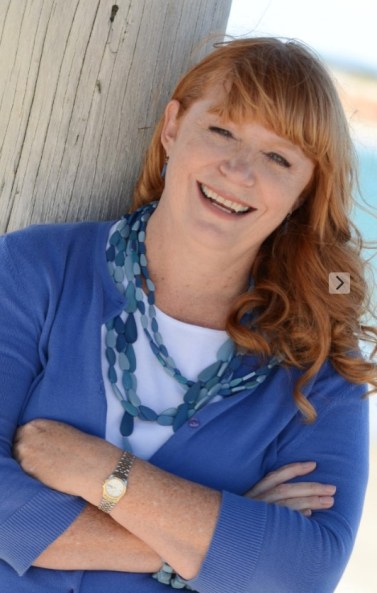
Victoria Purman headshot

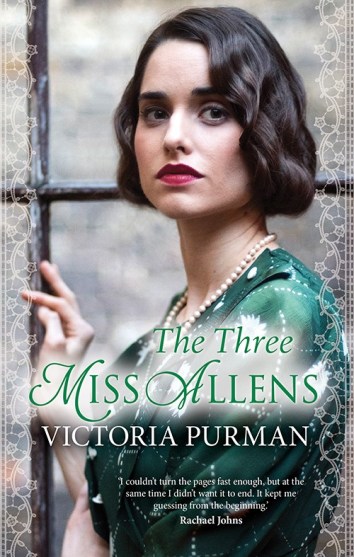
When I interviewed South Australian author Victoria Purman about her most recent novel, The Three Miss Allens, it felt like I was catching up with a friend from my school days, or a former work colleague. We were born in the same year, have many cultural touchstones and memories in common, and each pursued a career in journalism. While I stayed with print journalism, Victoria ventured into broadcast news and, later, moved into government and corporate sectors, including stints as a communications specialist for high profile politicians in SA.

She now combines a part-time communications career with a passion for writing romance novels, having racked up a number of published titles, with several more in the pipeline. The Three Miss Allens (Harlequin) combines contemporary and historical storylines and explores a number of significant social issues from the past and the present, including domestic violence, education and employment for women, and the plight of unmarried mothers. Victoria also gives back to the community through her roles with the SA Writers Centre, Romance Writers of Australia (RWA) and the Carclew Youth Arts Board. 

Victoria’s passion for writing and reading, her exuberant personality, and her warmth and wit shone through during our conversation, and are clearly evident in her stories — and in her responses to my questions. I’m certain you’ll enjoy reading about the books and authors she loves, and the titles on her shelves.

Victoria Purman --- Miss AllensQ. Victoria, how would you describe the work that you do and how you do it?

A. I write books for women about women, featuring emotional journeys through loss and love. How do I do that? Lots of typing! Believe me when I say it takes lots of typing, imagining, conversations in my head and what-if scenarios playing out when I’m hanging up the washing.

Q. What is your latest project, and/or what do you have in the pipeline?

A. I’ve just submitted my 11th and 12th books: a full-length family saga to Harlequin MIRA, and a novella about an Aussie firefighter for the US-based Tule Publishing. In a few weeks, I’m going to start working on my 13th book – I hope that’s a lucky number – for Harlequin MIRA.

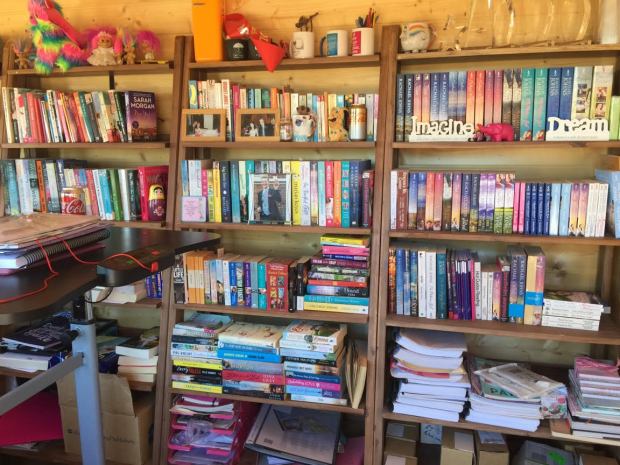
Q. Where are the main bookcases in your home or office? Do you also keep books in other places at home (or elsewhere)?Victoria Purman shelf 2

A. When we moved house five years ago (because with three then teenaged boys we needed more space) we were lucky enough to find a place with a spare room that is half my study and half the boys TV room. Before we even moved in we installed floor to ceiling bookshelves along one wall to hold books, CDs, DVDs, photo albums and games. But there’s not enough space and from the start we had to double up the books!

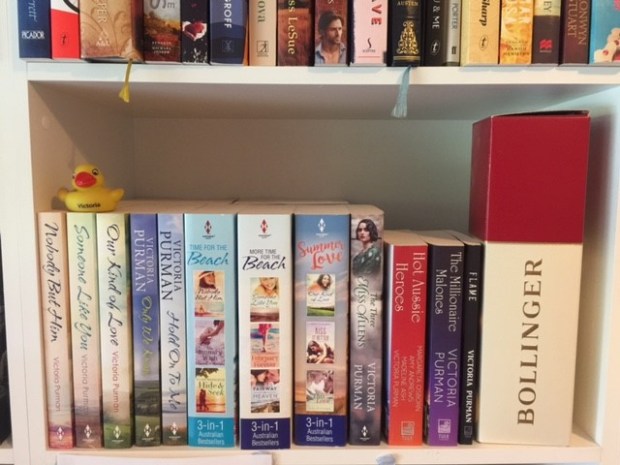
Q. How are your books organised/arranged? (ie alphabetically, by theme or genre, using some sort of formal or informal filing system, by colour perhaps?)Victoria Purman shelf 1

A. Nothing so organised! I do have two special shelves – one for all my own books, and another for all the signed books I’ve collected over the years from author friends, book launches I’ve been to and from the authors I’ve interviewed as part of Adelaide Writers’ Week. That’s getting full, too!

Q. What sorts of books predominate?

A. There’s a huge mixture on the family book shelves, from the collection of Wisdens to sports, history, literary novels, Harry Potter, romances, women’s fiction and historical non-fiction, which is my husband’s favourite genre.

Q. Describe your favourite reading place.

A. My bed! I try to read every night when everything in the house is quiet and I’m not too tired.

Q. What book/s are you reading right now? Why did you choose that book/those books and what do you think of it/them so far?

A. I’ve just finished In At The Deep End, by my friend and fellow Harlequin author, Penelope Janu, which I adored. And I’m not just saying that because I know her! She’s written a Norwegian navy commander who’s either wearing a dress uniform or a wetsuit. Say no more! And I’ve just finished Girl Waits With Gun, by the US author Amy Stewart. I heard her speak at Adelaide Writers’ Week and she described a real-life tale of the Kopp sisters in 1914 New Jersey. I loved that too – it’s a little Phryne Fisher-esque, which is fabulous. I also have a whole stack on my TBR pile – including Wayward Heart, by Cathryn Hein, and Break The Rules, by Claire Boston.

Q. What are your favourite books and/or who are your favourite authors?

A. Nora Roberts would have to be right up there. To Kill A Mockingbird was my first true favourite and, of course, Pride and Prejudice and Persuasion, by Jane Austen. And then there are too many to name!

Q. In the event of an emergency, if you could save just three books from your collection, which books would they be – and why would you choose them?

A. My own! I’ve saved copies to give to my sons when they’re older, so I would grab those first!

Q. If you could sit down for afternoon tea with your three favourite characters or authors, who would they be, what would you serve them, and what would like to talk to them about?

A. Banana Cake because it’s amazing! I’d love to sit down with Nora (hello!), to ask her about her career and ideas and how she writes such snapping dialogue, Jane Austen to ask her about her own love life (such a mystery), and Monica McInerney because I’ve met her and she’s absolutely delightful.

Find out more about Victoria here:

Website

Facebook

Twitter

#victoriapurman #romancewriters #harlequin #harlequinMIRA #thethreemissallens #historicalfiction #womensfiction #romance #sawriterscentre #romancewritersofaustralia

Shelf Aware — Annabel Smith

SONY DSCIn 2014, after traditionally publishing her first two novels, Perth-based author Annabel Smith opted to self-publish her third novel, The Ark, primarily because it defied traditional genre boundaries. This interactive speculative fiction “novel in documents” — with an app allowing readers to directly connect with the story — is innovative, bold and brilliantly realised (and a damn good read). At the time of its release, I spent a delightful hour or so interviewing Annabel over lunch at the Fremantle Arts Centre cafe, and immediately felt I’d met a kindred spirit.

On the strength of our chat, I also went straight out and bought her first two novels, A New Map of the Universe and Whisky, Charlie, Foxtrot (re-released in the US as Whiskey & Charlie), both of which captured my heart. Since then, I’ve encountered Annabel at various events, and benefited greatly from the plotting workshop she presented at Rockingham Writers Centre, last year. As you’ll see, when she writes about her next novel in this guest post for Shelf Aware, Annabel is not content to rest on her laurels — she’s always keen to set herself new challenges and experiment with her fiction.

Annabel has also recently started a blog in conjunction with fellow Shelf Awareness guest blogger Jane Rawson (another uniquely gifted Aussie writer), with the aim of helping fledgling authors understand what will happen in the lead-up to their book being released to the wide world. It’s called — delightfully — What to Expect When You’re Expecting… a Book. You can read it via the link to her website at the bottom of this guest post.

In the meantime, find a comfy spot, settle in, and enjoy learning more about writer and reader Annabel Smith. You are in for a treat.

Q. Annabel, how would you describe yourself as a writer?Annabel Smith 1

A. Right now, I would describe myself as a writer constantly reminding myself that the creative process matters more than commercial outcomes.

Q. What projects are you currently working on or do you have in the pipeline?

A. I’m working on the first book in a series which is a contemporary take on an epic quest. It involves a trio of unlikely heroes joining forces to overthrow an evil priestess.

Q. Where are the main bookcases in your home or office? Do you also keep books in other places at home (or elsewhere)?

A. Most of my books are in my study at home; the rest are dotted around our living room on various shelves.

Q. How are your books organised/arranged?

A. I’m a little embarrassed to admit this because I know it’s seen as very gauche by serious book collectors, but I organise my books by colour. Books make a room look beautiful, especially if they are grouped by aesthetics rather than by other systems. I find it easy to remember where books are using this system as although I’m not generally a hugely visual person, I always remember the colour of the spine.

Q. What sorts of books predominate?

A. The vast majority of my books are contemporary literary fiction, mostly from the US and Australia. A significant number fall into the speculative fiction genre. A small number are memoirs by writers and books on writing.

There are a few books I loved as a child, like Anne of Green Gables, and Alice in Wonderland, as well as some beloved picture books from when my son was little. I have a handful of volumes of poetry including Anne Michaels, TS Eliot, and Pablo Neruda.

Q. Describe your favourite reading place.

A. Right now  I am on a week-long writing retreat at Katharine Susannah Prichard Writers’ Centre and they have an insanely comfortable chair which I sit in for hours in the evenings reading. * At home, I read on the couch, or if my son is home playing noisily with a friend (which seems to be a lot!) I read lying on my bed. I don’t really like reading lying down though. I find my arms get tired of holding the book above my face!

Q. What book/s are you reading right now? Why did you choose that book/those books and what do you think of it/them so far?

A. All my reading at the moment is in preparation for the sessions I am chairing at Perth Writers’ Festival. I’ve just finished Madeleine Thien’s Do Not Say We Have Nothing which was an astonishing work of historical fiction which rendered in heartbreaking detail a very dark period in Chinese history. I’m also reading two non-fiction books about Communist China, which are quite outside my usual reading comfort zone but are both fascinating; these are Mei Fong’s One Child, and Madeleine O’Dea’s The Phoenix Years. Over the last two nights I positively hoovered up Jessie Burton’s The Muse which was a wonderful page turner and an interesting exploration of creativity. *

Q. What are your favourite books and/or who are your favourite authors?

A. For almost twenty years I have been re-reading Ann Patchett’s Bel Canto and in all that time it has never ceased to beguile me so on those grounds I would call that my favourite book, with Jennifer Egan’s A Visit from the Goon Squad, Don DeLillo’s White Noise and Ernest Hemingway’s The Garden of Eden also finding a place on the podium! At this stage it seems likely that Hanya Yanigahara’s A Little Life will become an all-time fave.

I am a rusted-on fan of Kazuo Ishiguro; I’ve read and loved everything he’s written. I’ve been reading, enjoying and learning from writers like Margaret Atwood, Joan Didion and Jonathan Franzen for many years. More recently I’ve discovered new favourites including Louise Erdrich, Patrick deWitt, and Jeff VanderMeer.

Q. In the event of an emergency, if you could save just three books from your collection, which books would they be – and why would you choose them?

A. I’m not overly attached to books as objects; I love them for what’s inside them and almost all the books in my collection could be replaced. However there are a few which have great sentimental and personal value. One of these is The Virago Book of Women Travellers, edited by Mary Morris, which I read whilst travelling around Europe aged 21. It was my first time navigating the wide world alone and I was frightened and uncomfortable much of the time. The true stories Morris collected of other women’s travels gave me such courage and succour. I also have a much-underlined copy of Sylvia Plath’s Letters Home which felt instrumental in my journey to becoming a writer. I wrote about it here.

Q. If you could sit down for afternoon tea with your three favourite characters or authors, who would they be, what would you serve them, and what would like to talk to them about?

A. I had the great pleasure of hearing Elizabeth Gilbert speak about creativity at Perth Writers’ Festival a couple of years ago, and of meeting her very briefly afterwards. She was incredibly warm and inspiring and I have wanted to adopt her as my big sister/mentor/friend/confidante ever since.

Cheryl Strayed’s collection of agony aunt letters Tiny Beautiful Things is one of the best things I have ever read in terms of being so fully and openly human so I’d love to spill my guts to her and get her advice on anything and everything.

Maria Semple seems neurotic in a way I find relatable and strangely compelling and also has a wonderful sense of humour. I’d serve champagne with almond croissants. We would have girly chats about friendships and crushes. Maybe a little about books and writing.

*At the time of answering questions.

For more about Annabel:

Website: annabelsmith.com

Facebook: Annabel Smith

Twitter: Annabel Smith

#annabelsmithAUS #perthwriters #australianwomenauthors #whiskycharliefoxtrot #theark #whiskeyandcharlie #speculativefiction #literaryfiction #blogger #latestreadingrecommendations #bigmagic #elizabethgilbert #tinybeautifulthings #cherylstrayed #janerawson


Shelf Aware — Sara Foster

Sara Foster 2017

Author Sara Foster. Picture credit: Christine and Mary Walsh.

Perth-based novelist and former book editor Sara Foster’s fifth novel, The Hidden Hours, was published on April Fools’ Day, but long before then it was generating plenty of interest within the publishing industry, and among Sara’s many readers. It’s psychological suspense set in a London publishing house, and centres on the murder of Arabella Lane, a senior executive at the firm, and new employee, Eleanor, believed to be the last person to see Arabella alive. The problem is, the hours surrounding Arabella’s death are “missing” from Eleanor’s memory, and Eleanor is desperately trying to forget her own traumatic past.Sara Foster Hidden_Hours_for_Sara_1

The Hidden Hours is next on my “to-read” pile — literally on my desk, next to me, as I type these words. And if her earlier novels are any indication, I’m likely to read it in one sitting — possibly because I’ll be too scared not to finish it all at once, or because I’ll simple have to know what happened to Arabella and to Eleanor, and I won’t be able to get to sleep until my questions are answered.

Sara lives with her husband just outside Perth, where she home schools their two young daughters. She is a doctoral candidate at Curtin University, with a focus on the role of mothers in dystopian fiction, and loves to travel, wherever and whenever possible. I’m certain you’ll enjoy reading her answers to my Shelf Aware questions as much as I did. Her passion for reading and writing is evident in every response — but especially in her list of favourite books and authors…

Q. How would you describe the work that you do and how you do it?

A. I aim to develop stories with compelling plots that always have a more serious observational side to them too. All my books are studies in something integral to the human experience – such as trauma, grief, belief, hatred, communication, neglect – but I try to put that into a page-turning format.

My main genre is somewhere between mystery, thriller and psychological suspense – I usually start with an interesting character or situation and try to sketch out a compelling plot from there. This involves a lot of time drafting, either at the computer or on paper. However, sometimes I get out and about to research ideas, and that is definitely one of my favourite parts of the process.

Q. What is your latest project, and/or what do you have in the pipeline?

Sara Foster Hidden-Hours-bookA. My book The Hidden Hours has just been released in Australia. It’s the story of a young Australian woman, Eleanor, who moves to London and begins working at a publishing house. She’s only been there for a few weeks when Arabella Lane, one of the directors of the company, is discovered dead in the River Thames after the office Christmas party. Everyone knows that Eleanor was one of the last people to see Arabella, but Eleanor cannot recall a few hours of the evening. As the investigation progresses, it becomes clear that people close to Eleanor may be involved. Under intense pressure from all sides, she begins to unravel, and memories of her traumatic childhood are drawn to the surface.

In addition to this, I’m already working on the next idea, which is another psychological suspense that deals with some contemporary women’s issues. I’m also studying for my PhD exploring YA dystopian fiction, so there’s plenty to keep me going!

Q. Where are the main bookcases in your home or office? Do you also keep books in other places at home (or elsewhere)? How are your books organised/arranged?

Sara Foster big front room books

A. I have a front room crammed with bookcases, and my study is also full of books. I often have a large wobbly pile on my bedside, and of course we have lots of children’s books in two more bookcases in the lounge and in each of their rooms.

The front room used to have a little colour scheme happening on certain shelves, but I always run out of space and then it gets more haphazard. Every now and again I have a big rearranging session. I have shelves of signed books, children’s books, books on certain topics, coffee table books, dystopian titles and books I have worked on. I also have about five crates of books in the garage that won’t fit anywhere!

Q. What sorts of books predominate?

Sara Foster dystopian

Part of Sara’s dystopian book collection.

A. I have a bit of everything! I have classics, general fiction, literary fiction, dystopian, mystery and crime, non-fiction, animal and environmental books, coffee table books, dictionaries and anthologies, autobiographies, lots of children’s books and a fair amount of YA.

Q. Describe your favourite reading place.

A. Lying in the hammock in our back garden, under the shade when the sun is warm but not too hot. Bliss!

Q. What book/s are you reading right now? Why did you choose that book/those books and what do you think of it/them so far?

A. I always seem to be reading a few books at the same time nowadays! I’m reading Shrill, by Lindy West – I saw Lindy at the Perth Writers Festival and really enjoyed her talks. I tend to pick this one up when I don’t have enough time to get into a novel, and so far I like it, but it’s not wowing me yet.

I’m also reading An Isolated Incident, by Emily Maguire. This one passed me by when it first came out, but I thought the storyline sounded really interesting, and I was intrigued by the Stella Prize suggestion (it’s on the shortlist) that it redefines the crime genre. I can’t comment on that yet, but Maguire has set up a compelling story and the voices are unique and strong.

My eldest daughter (age 8) and I are reading Tuesdays at the Castle, by Jessica Day George (although we’ll be back on Harry Potter shortly, I should imagine), and my youngest (age 3) is obsessed with the Emily Brown books, by Cressida Cowell.

Q. What are your favourite books and/or who are your favourite authors?

A. I’m going to give you the long version, and this still misses out many books, as I have been wowed many times.

Classics: Rebecca by Daphne du Maurier, The Waves by Virginia Woolf, Pride and Prejudice by Jane Austen, and The Tenant of Wildfell Hall by Anne Bronte.

Amazing books I’ve read in the last twenty years include The Colour Purple by Alice Walker, One Hundred Shades of White by Preethi Nair, Beloved by Toni Morrison, I Know Why the Caged Bird Sings by Maya Angelou, The Kitchen God’s Wife by Amy Tan, The Bronze Horseman by Paullina Simons, The Handmaid’s Tale by Margaret Atwood, Beneath the Skin by Nicci French.

More recently I’ve loved titles by Heather Gudenkauf, Kate Morton, Wendy James, Liane Moriarty, Jodi Picoult, Anita Heiss, Zana Fraillon and Emma Healey. The latest Hannah Kent book The Good People blew me away, and I think Jasper Jones by Craig Silvey is incredible.

Favourite dystopians are probably the Pure series by Julianna Baggott and Station Eleven by Emily St John Mandel. I also loved Clade by James Bradley.

I’m a genuine fan of all the work by the writers in my little writing group: Amanda Curtin, Natasha Lester, Annabel Smith, Yvette Walker, Emma Chapman and Dawn Barker – they are all incredibly talented.

My favourite books about animals are The Elephant Whisperer by Lawrence Anthony and Priceless by Bradley Trevor Grieve. My favourite book of poetry is The Self-Completing Tree by Dorothy Livesay.

Sara Foster -- Maggie O'FarrellThis is the long version and I still feel like I’m missing out many titles and authors! Finally, there is a very special place in my heart for Maggie O’Farrell – I’ll always hunt down her books and she’s been an inspiration for a long time.

Q. In the event of an emergency, if you could save just three books from your collection, which books would they be – and why would you choose them?

Sara Foster signed and special books

Signed and special books from Sara’s collection.

A. Well, it would be a very difficult task but three top picks would be: first of all, the signed limited edition of Maya Angelou’s I Know Why the Caged Bird Sings that my best friend from childhood bought me for my 40th birthday. Second, a copy of The Bluest Eye by Toni Morrison that she signed at an event a long time ago. And third, a facsimile edition of Winnie the Pooh that my mum bought for me.

Q. If you could sit down for afternoon tea with your three favourite characters or authors, who would they be, what would you serve them, and what would like to talk to them about?

A. I would like to get Jane Austen, Virginia Woolf and Maya Angelou in the same room, and ask them everything about their experiences of writing and womanhood! I would provide a sumptuous high tea, and I wouldn’t do much talking, I’d just listen (and eat – and take notes)!

You can find out more about Sara on social media:

Website: sarafoster.com

Facebook: Sara Foster, Author

Twitter: @sarajfoster

Instagram: sarafoz

Shelf Aware — Amanda Curtin


amandaThe first time I read the opening lines of Amanda Curtin’s novel Elemental I was utterly captivated by its protagonist, Meggie Tulloch. The wee Scottish ‘herring girl’ has rich red hair, which makes her a target of suspicious fishermen in the village where she lives, at the turn of the 20th Century. By the time I’d finished this poignant, sometimes harrowing but exquisitely crafted story, I knew this book deserved a place among my all-time favourites. I am now also utterly captivated by the gracious, soft-spoken and incredibly talented woman who created the tale. Amanda Curtin is a freelance book editor, occasional workshop presenter and an author of immense talent. Her other books include The Sinkings, a novel inspired by a mysterious death in the campsite of the same name, near Albany, Western Australia, in 1882, and Inherited, a collection of finely wrought short stories, as well as other short stories published in assorted anthologies. Grab a cup of tea or coffee, sit back, and enjoy her contribution to the Shelf Aware series. 

Q. Amanda, how would you describe yourself, as a writer?

A. A slow one. But, to be more specific, I’m a writer of literary historical fiction (novels and short stories), with a particular interest in Western Australian history.

Q. What projects are you currently working on or do you have in the pipeline?

A. I’m working on two projects and, strangely enough, neither of them happens to be historical fiction! The first is a novel set (mostly) in the present time; the second, a work of narrative non-fiction on the life of artist Kathleen (Kate) O’Connor.

Q. Where are the main bookcases in your home or office? Do you also keep books in other places at home (or elsewhere)?

amanda-section-of-fiction-shelvesA. In our family room we have a large double bookcase, and the coffee table (see below) acts as another receptacle for books. There are also three bookcases in our dining room and three in my studio.

Q. How are your books organised/arranged?

A. We have different bookcases, or sections of the larger bookcases, for different things—for example, our collection of crime fiction (mostly my husband’s but it’s also a genre I like to read when I get a chance), my small collection of antiquarian books, reference books associated with my editing career, books that I’ve edited or proofread, books I’ve amassed for research (an eclectic bunch, that one!), books on WA history.

My huge collection of fiction occupies half a wall, and I finally got around to arranging it alphabetically a few years ago, after being shamed into it by my sister, who is a librarian and didn’t care for the haphazardness of my own ‘system’.

Q. What sorts of books predominate?

A. Literary, historical, YA and short fiction would probably occupy most of my shelf space, but as I like fiction that makes you think, and such books can be found in many genres, there’s a sprinkling of crime, fantasy, dystopian and junior fiction too.

Q. Describe your favourite reading place.

A. I usually read in the family room, on the sofa, with my feet up on an ottoman. I seem to be one of the few people who never read in bed.

Q. What book/s are you reading right now?amanda-to-be-read

I have a lot of books waiting to be read, and no doubt I’ll add to it at the Perth Writers’ Festival, no matter how many hand-on-my-heart resolutions I make! * I keep them in little piles on the lower shelf of our coffee table, which tends to visually minimise their number, so I thought I’d pull them out and take a closer look—here’s the result!

The reason the pile is out of control at the moment (although there’s never a time when it is under control) is that all my reading time is occupied with research-related books. I’m currently reading The Letters of Frances Hodgkins (University of Auckland Press, 1993).

Q. What are your favourite books and/or who are your favourite authors?

A. Too many favourite books but the list of long-standing favourites would include Perfume (Patrick Süskind), Sixty Lights (Gail Jones), Tirra Lirra by the River (Jessica Anderson), The Hours (Michael Cunningham), The Shipping News (Annie Proulx), The Winter Vault (Anne Michaels), Possession (A.S. Byatt), The Blind Assassin (Margaret Atwood), Little Women (Louisa May Alcott), The Travel Writer (Simone Lazaroo) and Black Mirror (Gail Jones).

More recent additions: A Little Life (Hanya Yanagihara) The Last Painting of Sara de Vos (Dominic Smith), The Fishermen (Chigozie Obioma), The Reunion (Andrea Goldsmith) and Coming Rain (Stephen Daisley).

I have a strong interest in Australian women’s fiction—YA as well as literary—and many of my favourite authors are women I am fortunate enough to know. I’d find it agonising to list them in case I unintentionally left someone out!

Q. In the event of an emergency, if you could save just three books from your collection, which books would they be—and why would you choose them?

A. As most could be replaced, I’ll choose three that could not be:

• my first edition of Coonardoo by Katharine Susannah Prichard (it isn’t signed by the author but I do love the inscription: ‘To Bert with best wishes from Dad Xmas 1929’)

• a leatherbound copy of Tennyson poems, published in 1892, that is the most beautifully tactile book to hold and in whose pages I found a perfectly preserved frond

• a copy of The Sinkings that might look like every other copy but is the first one I lifted out of the box of author copies my publisher sent me when my first book was published in 2008.

* Amanda later told me she came away from opening night for PWF with a sizeable pile of new books for her shelves…
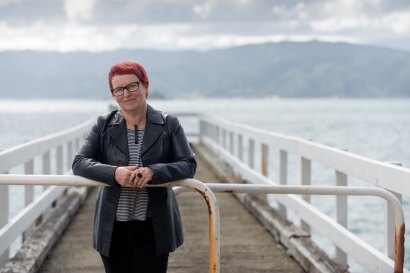
Elemental, by Amanda Curtin, is published by UWA Publishing, rrp $29.99.

Find out more about Amanda:

Website
Twitter
Facebook author page

#amandacurtin #elemental #thesinkings #uwapublishing #uwap #shetlandislands #herringgirls #literaryfiction #perthwriter #inherited #katharinesusannahprichard #tennyson #alittlelife #hanyayanagihara #dominicsmith #chigozeobioma #stephendaisley #andreagoldsmith

Behind the scenes at a writer’s retreat

Karen and Monique from Serenity Press — who will publish my first children’s picture book later this year — have just arrived back in WA after their inaugural Serenity Retreat, at a castle in Northern Ireland. Monique has written this blog post about their amazing experiences. Check out some of the stunning photos, too.

writenote1's avatarMONIQUE MULLIGAN

I’ve just arrived back in Perth after two whirlwind weeks in the United Kingdom: the first at the Serenity Press Retreat in Crom Castle, Northern Ireland; the second at the London Book Fair, representing Serenity Press (more on the book fair in my next post).

For me, the Serenity Press retreat was part of my job (not that I’m complaining about getting to work and sleep in a castle for a week). I was there with my Serenity Press hat on, and that involved getting up early to cook breakfasts, look after everyone in the castle, and lots of organising. Karen, my business partner, was amazing – she acted as driver and grocery shopper, in between being mum to her children who accompanied her to Ireland.

But, despite the long days, the retreat was much more than “just a job”. It was a memorable experience that started from the moment…

View original post 601 more words