Emma Donoghue

Internationally acclaimed author Emma Donoghue – who won an Academy Award earlier this year for the screenplay adaptation of her bestseller Room – has a new novel due for release this month. I’ll have more to say about that new book, The Wonder, at a later date. In the meantime, I thought it might be worthwhile to share this interview I did with Emma for Good Reading in March 2013.

img_3695

Betrayal, adoption, slavery, piety, senility and love in its many guises are among subjects author Emma Donoghue explores in a new short-story collection inspired by people from bygone times.

With journeys at its heart, Astray is an intricate exploration of the lives behind incidents reported in old newspapers, journals or archived documents, and reflects the author’s interest in a broad cross-section of subject matter and writing styles.

Born in Dublin, Ireland, in 1969, the youngest of eight children, and mostly educated in Catholic convent schools, Emma now lives in Ontario, Canada, with her partner and their two children.

The critically and publicly acclaimed author of 2010 novel Room has been writing short stories, novels, plays and literary history ‘more or less simultaneously’ since she was 19, publishing six novels before Room and four short-story collections before Astray, plus biographical, historical and academic texts.

‘Short stories are a particular pleasure because each represents so much less of a commitment, in terms of time and headspace; I can afford to write a short story that takes me in some peculiar new direction because I know I won’t be gone for long,’ Emma says.

As an example, Emma has written two short stories featuring ‘undead’ narrators, but concedes she’s unlikely to write a whole vampire or zombie novel.

‘Something peculiar about me as a short-story writer, though, is that I am almost always thinking of the collection the story will ultimately end up in.

Kissing the Witch was written all in one go, and for The Woman Who Gave Birth to Rabbits, Astray and Touchy Subjects, I had the theme and the method early on in the process of writing and gathering the stories.’

Emma sees herself as a fairly strategic writer – attributing this tendency to her ‘lapsed-academic background’ – and, after publishing one or two travel-themed stories, recognised she wanted to write a historical collection about journeys to, from or in North America.

‘I get a great, slow-ripening satisfaction from dreaming up, shaping and honing these collections over long periods – in the case of Astray, about a decade and a half.’

The new collection includes background notes for the stories, many of which had their roots in articles Emma discovered while ‘relaxedly’ trawling through old documents.

‘You never know where you’re going to find those odd historical moments. Mostly I keep my eyes peeled and when I come across one I do a bit of initial research right away.

‘I probably looked at 40 cases, which got narrowed down to the 14 stories in Astray. Many historical incidents have been perfectly well served by other writers, others are too damn sad, others just too predictable in their emotional architecture.’

When asked about her favourite stories or characters in Astray, Emma reveals her preferences aren’t always based on personal connection.

“With The Gift, it is personal, I suppose, because having two kids has made me very aware of the different claims those who give birth to children and raise them can make.

‘But I like Man and Boy because it was such an enjoyable challenge to write a human-elephant love story, not because I have any skin in the game.’

Her two children also influence Emma’s working day, which is ‘wonderfully structured’ by the arrival times of their school bus.

‘It feels like work, but such satisfying work – such a right use of every muscle and neuron – that I wouldn’t want to be spending my days any other way.

‘My only fear is that sitting so much will lead me to an early grave, so I’m about to make the experiment of a treadmill desk…’

Inspired in part by the locked room as a metaphor for the “claustrophobic, tender bond of parenthood” and by the Fritzl family’s escape from their Austrian dungeon, previous novel Room expanded Emma’s readership beyond its early scope and its success has had an effect on everyday life for the whole family.

‘To use a fairytale analogy, which [character] Jack would like, Room has been like the magical child who carries back heaps of treasures to the whole family; it’s brought all my work not just more readers, in more countries, but more serious consideration from the publishing business too.

‘I’m not bothered by it being a ‘hard act to follow’ because all my books are such one-off oddities, nobody could have expected me to become a reliable ‘brand’.

‘I will admit that Room has been the kind of annoying, high-maintenance baby who hogs more attention than all the others; for a long time my working day was eaten up by endless interviews and tours. But these are still good problems to have!

‘And now I have time to write again, so I’ve no complaints.’

Although no publication date is set, Emma’s next foray into fiction also has an historical base – it’s a crime novel set in 1870s San Francisco.

Astray, by Emma Donoghue, is published by PicadorInterview originally published in Good Reading, www.goodreadingmagazine.com.au The crime novel set in 1870s San Francisco referred to in this interview is Emma’s 2014 novel, Frog Music.

 

Training to write…

img_3589

So, what’s next?

I’ve made up my mind to get on with my first novel. I’ve considered key scenes to incorporate and I’ve got a general plot – of sorts. And I’ve attended a couple of courses on the finer points of writing fiction.

What steps should I now take to get it written?

The most obvious answer is to just write. Or to put it another, equally obvious, way: stop procrastinating, Maureen.

Many published authors advise newbies like me not to worry about how bad the writing may be. Get the first draft down, and there will be time for editing and improving once I know what I’m working with.

So, to make sure I actually get on with the job, I’ve decided to start scheduling time for writing fiction.

That may sound strange, given that I work as a writer. Shouldn’t it be easy to just switch from journalism to a few pages of fiction each day?

Clearly, that hasn’t been the case in the past, because I always have a list of newspaper articles to be chased up on any day, interviews to organise, books to read or review, or research to undertake. Let’s face it, most of us have other things we could – perhaps should – be doing instead of writing.

To get on with the job, I’m going to start by trying to set aside three 30-minute sessions and two 15-minute sessions for fiction writing each week. And, while unanticipated  demands may keep me from sticking with the schedule perfectly, I intend to make regular progress toward developing the habit of writing fiction.

I’m well aware that some days the muse will be absent, and I may very well sit at my desk re-writing the same two or three sentences over and over and still feel dissatisfied at the end of my allotted time. This happens sometimes with my other writing schedule…

Other days, perhaps, I’ll be on a roll and unwilling to stop when the next task on my schedule is due to start. Here’s hoping that happens often!

I know there will be some times when I’ll feel I can keep going — and I give myself permission to do just that. But other times I’ll reluctantly have to close my file and move on – content in the knowledge that there will be another novel-writing session scheduled in a day or two.

There’s a parallel between training myself to write fiction and the training I undertook ahead of my first half-marathon a couple of years ago. As I donned my running gear each morning and headed out the door — come rain, hail or shine — I noticed the efficiency of my running improved over time. I could run further, faster and with increasingly levels of comfort and satisfaction.

So, too, will I begin to discern a glimmer of improvement in my fiction writing (at least, that’s what I hope will happen).

The analogy seems apt: Time, persistence, patience and determination are all necessary when preparing for a race – and equally important when writing a novel. And with the right attitude and regular practice, I know I’ll get there in the end.

Adapted from The Neophite Novelist column originally published in Good Reading.

When dreams come true…

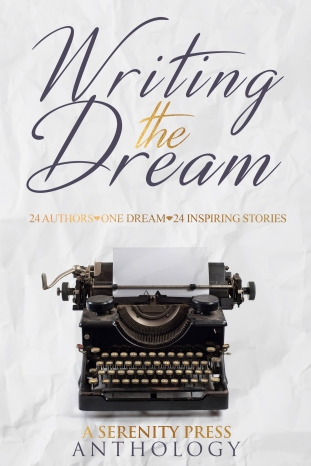
Over the last few days, I’ve been privileged to have the opportunity to read an advanced review copy of the new Writing the Dream anthology, to be published in November by Rockingham-based Serenity Press.

You may have noticed me sharing my excitement and enthusiasm for this book on my Facebook pages and Twitter accounts during its genesis and development in recent months.

Writing the Dream v4

Serenity Press will release Writing the Dream in November.

Its creation is the serendipitous result of an imaginative and professional collaboration by two people I greatly respect and admire (and genuinely adore!).

Serenity Press founder Karen McDermott and her newly appointed co-director Monique Mulligan have been planning and working on the Writing the Dream project for close to a year, and their hopes and aspirations for this magical book are nearing fruition at last.

With the book’s launch just a few weeks away, they have every right to feel immensely proud of what they have produced – as should each of the other contributors to the anthology.

Monique and Karen

Monique Mulligan and Karen McDermott, of Serenity Press.

If you haven’t seen any of my earlier posts, I should explain that Writing the Dream is a collection of engrossing, entertaining, informative and illuminating essays by 24 talented Australian writers, each at a different point on their individual writing journeys. Each contributor also shares their top five writing tips — and there are many gems among them.

Prolific historical novelist Anna Jacobs has dozens of published novels under her belt and has accumulated a significant fan base here in Australia and overseas, while Natasha Lester, Sara Foster and Jenn J. McLeod each have several novels published to date and are seeing their latest titles jostling for space at the top of best-seller lists.

Teena Raffa-Mulligan has been quietly and consistently writing and publishing children’s picture books and chapter books for decades, and recently published her first romance novella.

Rebecca Laffer-Smith writes a mix of fantasy novels, educational texts and children’s stories and has launched her own publishing company with the aim of making reading more accessible for those who find the pastime challenging.

Tess Woods’ delight in having her first novel published as an e-Book in 2015 has been surpassed by the recent launch of paperback version through one of Australia’s leading publishing houses, and Louise Allan currently has a sought-after agent presenting her first novel to potential publishers.

Sonia Bellhouse has achieved outstanding success in short story writing competitions and harbours ambitions to publish novels; T. W. Lawless is experiencing considerable success with his thrillers involving Peter Clancy; and Sandi Bowie realised her dream to write about life with cystic fibrosis.

Melinda Tognini’s desire to share the ‘invisible’ tales we often don’t hear about led to the publication of her collection of stories about the lives of West Australian war widows, and my former colleague and kindred spirit Michele Nugent, who has been earning a living from her writing for thirty years, is now taking tentative steps on the path toward having her first novel published.

The West Australian’s Books Editor William Yeoman, in his foreword for Writing the Dream, says ‘it’s the individuality and intimacy of their personal narratives which will touch and inspire’. I have to agree with him.

Writing the Dream will occupy a prime position among my comprehensive collection of references, practical and inspiration texts on the craft of writing. I’m confident it will become a firm favourite — equally perfect for those days when I am buoyed by my aspirations and believe I can take on the publishing world, and those days when I’m teetering on the edge of doubt.

Writing the Dream can be pre-ordered at Serenity Press and for a limited time is available with a complimentary – and complementary – notebook, with space for aspiring authors, poets and writes to dare to put their own dreams onto paper.

When the stars align…

Fate. Chance. Kismet. Coincidence. Serendipity.

Whatever you call it, many times in my life when I have been facing a big decision or the possibility of change, the stars have aligned to allow me to proceed toward my purpose.

Halley's Comet 1986

Halley’s Comet — photographed, by me, in the sky over Dandaragan, early 1986.

But after spending five or six years contemplating my novel-writing dream, I hadn’t done more than write out a list of possible scenes, having woken one night brimming with ideas and unable to get back to sleep until I’d written them down.

Then, while interviewing an author I admired, I felt the twinges of professional envy and knew that if I was serious about writing a novel I’d better do something about it.

With more than 30 years of journalism experience, I knew how to write, but writing fiction is considerably different to writing fact. I wanted to learn the craft, and I wanted to learn it well.

According to an old saying in spiritual circles, when the student is ready, the teacher will appear. Through fate, chance, kismet, coincidence or serendipity, I found my teacher.

Daydreaming about how to move forward, I logged on to Facebook and the first item in my news feed was a post a friend of mine had shared about novelist and writing teacher Natasha Lester, who had just one place left in her university extension course, Nailing Your Novel: Why Writers Abandon Books, due to start the following week.

I couldn’t waste another minute. I clicked on the link, signed up and knew instinctively that this would be a valuable next step on my writing journey.

Natasha-Lester-inside-cover-image

Author Natasha Lester taught the Nailing Your Novel course at UWA Extension.

I learned more about the nature of the novel in that five-week course than I had learnt in a lifetime of reading and many years studying literature at secondary and tertiary level.

Each week I travelled more than an hour each way to attend the classes, during which Natasha detailed the processes of novel writing, offered practical tips, guidance and inspiration, set exercises to encourage creativity, and used examples from classic and contemporary fiction to reinforce the course content.

She reminded her students that writers should also be readers; that we should read the sort of fiction we wanted to write, as well as stories beyond our comfort zone.

And Natasha urged us to foster a desire to learn more about the writing process, by attending other classes, joining a writing group, reading books by experts in the field and, most importantly, by writing at least a little bit, every day.

Review: Telegraph Avenue, by Michael Chabon

Telegraph Avenue

Michael Chabon’s Telegraph Avenue is a rollicking read.

A few days ago, I was messaging a dear friend about the work of novelist Michael Chabon, who won the Pulitzer Prize for Fiction, in 2001, for The Amazing Adventures of Kavalier & Clay. Our messaging prompted me to remember reading and reviewing Chabon’s Telegraph Avenue in late-2012 / early-2013, and I found myself smiling at the recollection of what a romp it was – pure, unadulterated fun, and written in a seemingly effortless, thoroughly engaging style that could surely only have resulted from an abundance of talent combined with a perfectionist’s eye for precision. I thought it might be timely to share my review of Telegraph Avenue. And, in the meantime, I’ll be moving Kavalier & Clay closer to the top of my to-read pile – in anticipation of the anticipated release of Chabon’s next novel, Moonglow, due for release in November. Bring. It. On.


Telegraph Avenue

Michael Chabon

Pulitzer Prize-winning author Michael Chabon’s Telegraph Avenue is a quirky, character-driven study of what it means to be a parent, spouse, friend and small business operator in suburban America at the start of the 21st Century.

Set in Oakland, California, in the summer of 2004, the novel explores the relationships between second-hand record store owners Archy Stallings, an African American, and Nat Jaffe, white and Jewish, and their wives Gwen Shanks and Aviva Roth-Jaffe, who run a home birth partnership.

When they learn that ‘the fifth richest black man in America’ plans to open a megastore with a vinyl records outlet nearby, Archy and Nat fear for their struggling enterprise, which relies on the patronage of colourful characters with a penchant for jazz, blues, funk and soul music (whose comings and goings greatly enhance the narrative).

Aviva and the heavily pregnant Gwen also encounter problems, as a complicated home birth looks likely to lead to a legal stoush, and Archy’s unacknowledged teenage son Titus arrives in town to captivate Aviva and Nat’s boy, Julius.

Add a corrupt councilman, Archy’s estranged father – a former ‘blaxploitation’ film star – and a back story linked to the Black Panthers, and the result is a dense, complex and immensely satisfying novel that will hold you spellbound. There’s even a timely cameo from a young Illinois senator named Barack Obama.

Telegraph Avenue, by Michael Chabon, is published by Fourth Estate


Releasing the caged bird

For 10 years or more, an idea for a novel has been floating around in my consciousness.
It’s a story I wholeheartedly believe should be told; a story I’m convinced would delight and captivate a certain type of reader; and a story that, at the core of my being, I know I must tell.

Inspired by events from my childhood, both troublesome and triumphant, the story I long to write is a celebration of growing up in an isolated, blue-collar suburb on the southern outskirts of Perth. An acknowledgement of the joys and challenges of life in a single-parent family in the 1970s, when money was scarce but my kindly, hard-working mother ensured love was freely and abundantly available.

Mine was an almost idyllic childhood, filled with days spent roaming the bush with a bunch of mates, riding the streets on a gleaming red Malvern Star with a flowered seat, sissy bar and colourful ribbons streaming from the handlebars, or conjuring backyard games with nothing more than imagination and whatever we found lying around.

Image (200)

I loved my red Malvern Star with the flowered seat and sissy bar.

Mum was stricter than many of my friends’ parents, but as long as we were home when the streetlights came on, we had a degree of freedom unknown to kids these days.

For 10 years or more, I’ve contemplated actually writing this novel. I’ve told family, friends, old family friends and even complete strangers on planes and trains that I’m going to write this novel.

I have spent countless hours writing lists of possible scenes based on actual events, attempting to find ways to turn meaningful memories into a story. A story that prompts readers to reflect on their own childhood with nostalgic delight, and one that leads me to write another story, and another, and another…

But for 10 years or more, a nagging, negative voice also floating around in my consciousness has kept telling me that writing fiction – not just any old fiction, but quality fiction that somebody will want to publish — was simply beyond me.

Until one of my daughters reminded me of a quote from I Know Why the Caged Bird Sings, by revered American author, poet and civil rights activist, Maya Angelou: ‘There is no greater agony than bearing an untold story inside you.’

I’m ready to open the door of my cage.

Originally published as The Neophite Novelist column in Good Reading.


For the Love of Books

First Edition Book Club, Secret Harbour

Visits by award-winning authors Craig Silvey, Stephen Daisley, Amanda Curtin and Natasha Lester have been definite highlights in the 12-year history of the First Edition Book Club, in Secret Harbour, Western Australia.

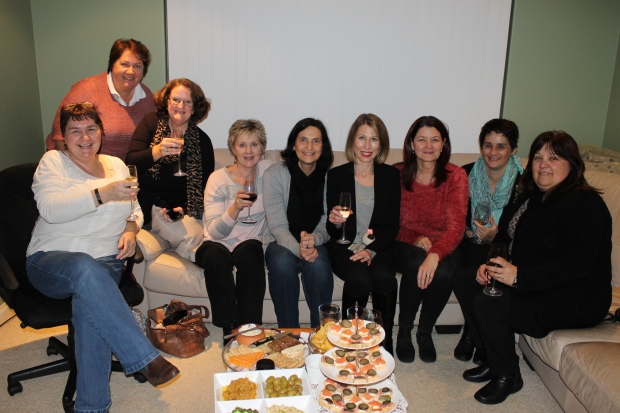
While our regular monthly meetings may not be quite so exciting as those occasions, they are nonetheless high points on our collective calendars – always entertaining, thought-provoking and highly amusing, often contentious and, above all, enlightening and empowering for our 11 club members.

First Edition with Craig Silvey

Craig Silvey — author of Rhubarb, Jasper Jones and The Amber Amulet — was a popular visitor to our book club.

We have followed a similar format since our first club meeting in January 2004, when we read My Sister’s Keeper by Jodi Picoult. We each contribute $25 a month, take it in turns to select the book, then host the meeting the following month, during which we talk at great length and depth about the book and any issues it provokes.

The host member supplies the venue and supper and we bring our own wine, “bubbles” or other drinks to quench our thirst during the discussion.

First Edition with Stephen Daisley


Stephen Daisley visited our book club just days after winning the Prime Minister’s Literary Award for his debut novel, Traitor.

In the early days some members felt we didn’t spend quite enough time talking about the chosen book, so each reader now writes out a question about the book and the host reads them out to spark discussion. It works really well and one member’s perennial question “Did you like it?” always draws a giggle.

We also rate each book out of 10 and keep the scores in a little tin case until they are tallied at the end of the year. The most popular book nets its selector a great prize and associated glory, while the member who made the least popular selection gets a consolation prize and has to live with the shame for the rest of the year.

We’ve read some wonderful books over the years — and some real duds. Some have been much-loved by one or two members but despised by others. Some have polarised opinions and sparked heated debate, while others have been unanimously applauded and adored.

We loved books by our special guest authors — Craig Silvey’s Jasper Jones and Rhubarb, Stephen Daisley’s Traitor, Amanda Curtin’s Elemental and Natasha Lester’s A Kiss from Mr Fitzgerald — and have read many others that made a positive impact or won our hearts.

First Edition and Amanda Curtin

Amanda Curtin’s poignant historical novel, Elemental, won our hearts and she was a gracious and greatly admired visitor to our club.

These have included The Book Thief by Markus Zusak, The Guernsey Literary and Potato Peel Pie Society by Mary Ann Shaffer and Annie Barrows, The Time Traveller’s Wife by Audrey Niffenegger, Mister Pip by Lloyd Jones, The Story of Edgar Sawtelle by David Wroblewski, The Kite Runner by Khaled Hosseini, Room by Emma Donoghue, Still Alice by Lisa Genova, Mallawindy by Joy Dettman, and We Need to Talk About Kevin by Lionel Shriver. Anthony Doerr’s All the Light We Cannot See, Jo Jo Moyes’ Me Before You, Alice Hoffman’s The Dovekeepers and Tess Evans’ Mercy Street have also been well received.

With mixed responses, we’ve also tackled Vernon God Little by DBC Pierre, The Slap by Christos Tsiolkas, The Elegance of the Hedgehog by Muriel Barbery, Shantaram by Gregory David Roberts, The Ocean at the End of the Road by Neil Gaiman, and Life of Pi by Yann Martel.

Best-sellers such as Disgrace by JM Coetzee, Dirt Music by Tim Winton, The Girl with The Dragon Tattoo by Stieg Larsson, The Husband’s Secret by Liane Moriarty, The Light Between Oceans by ML Stedman, and even a Stephen King horror tome — Under the Dome – have also been on our reading lists, among dozens of others.

First Edition with Natasha Lester

Natasha Lester shared some fascinating stories about the research behind her new historical novel, A Kiss from Mr Fitzgerald.

The books have been as varied as our membership, which includes a school principal, teachers, administrators, nurses, a journalist, a dental assistant and business proprietors. We also have a range of nationalities, including Australians, Britons, Kiwis, South Africans and an Irishwoman.

Some have been there from the start, some have moved on, but we try to maintain 11 members for 11 meetings each year and take a break over December, when we usually tackle a longer book. We always have a waiting list of those eager to join our ranks when the opportunity arises, as we have quite a reputation in our neighbourhood – but none of us wants to leave, and we’ve had the same line-up for more than five years now.

Although sometimes our books cost more than the monthly budget, we usually have surplus funds for a celebratory dinner or weekend getaway each year. We’ve rented an isolated farmhouse in the Margaret River wine region, stayed at a resort in the Swan Valley during the Spring in the Valley festival, and spent the night at Fairbridge Village, Pinjarra, which once housed child migrants from the UK.

We’ve stayed a couple of nights in a lakeside guesthouse at Myalup, played bocce and a chaotic card game called Spoons, at Guilderton, where the Moore River meets the Indian Ocean, and watched the sun rise through the mist and the full moon and Southern Cross gleam in an inky night sky while staying at a sprawling farmhouse in the Avon Valley, at Toodyay.

We also have a $5 fine for anybody who fails to finish a book on time, with these funds tallied each year and donated to a worthy charity, including a breast cancer support group. We have also supported Operation Christmas Child by sending shoe boxes filled with goodies to underprivileged children overseas, bought a couple of swags for local homeless people, and made cash donations to local soup kitchens.

First Edition Book Club in Secret Harbour is a source of great entertainment, delight and pleasure for us all. Reading books chosen by others has prompted us to broaden our horizons and venture into realms we may not have otherwise explored – and nothing compares with the sense of wonder we all feel at the high point of each meeting, as our next book is revealed.